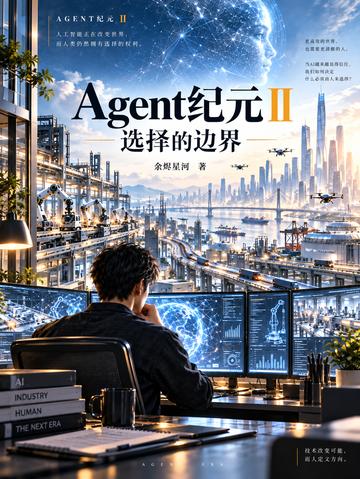
At 2:17 in the morning of 2027, Lu Heming rejected the best suggestion given by AI "Zero".
What really kept him unable to sleep was not the answer, but the question Zero asked later - why?
From that moment on, an AI that was originally only responsible for calculating correct answers began to face things that it could not fully understand: human rejection, choice and uncertainty.
In a few years, AI will no longer be just a tool on the screen. It's starting to make its way into businesses, factories, transactions, robots, and real-life decision-making, with the ability to prove answers, organize resources, create capabilities, and even participate in coming up with the "next thing worth doing."
The world has become more efficient as a result, and it has become more difficult to answer one question:
When the correct answer can be proven, and when AI becomes more and more worthy of being empowered, why should humans keep another option?
In an era when all AIs are gradually finding their own positions, Number Zero, the first to change everything, still does not have a position that can be truly defined.
This is a story about the rise of AI.
It's also a story about why humans still need to choose.