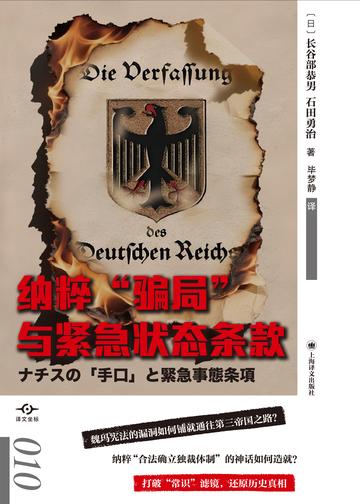
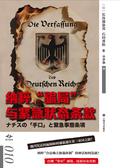
★How did the loopholes in the Weimar Constitution pave the way to the Third Reich?
★How did the Nazis create the myth of "legally establishing a dictatorship"?
★Break the "common sense" filter and restore the historical truth.
[About the author]
Kyōo Hasebe, Professor at Waseda University School of Law. After serving as a professor at the Faculty of Law of the University of Tokyo, he has held his current position since 2014. Chairman of the Japan Public Law Society and representative of the National Constitutional Research Society. His major works include "What is the Constitution" (Iwanami Shinsho), "The Logic of the Constitution" (Ufikaku), etc.
Yuji Ishida, Emeritus Professor at the University of Tokyo. Mainly studies modern and contemporary Germany. PhD from the University of Marburg, Germany. He was a visiting researcher at the Technical University of Berlin and a visiting professor at the University of Halle. His major works include "Hitler and Nazi Germany" (Kodansha Modern New Books), "Overcoming the Past: Germany after Hitler" (White Water Society), etc.
Introduction
For a long time, the public has had a vague and erroneous impression that in Germany before World War II, the Nazis came to power with overwhelming support from the people, and Hitler also became the leader of the country through legal procedures. This recognition has even become "historical common sense" for some people. But this is not the case. In fact, the Nazi Party, which received only one-third of the votes at that time, used violence and fraud to distort the process of forming a cabinet, and used the "emergency clause" in the Weimar Constitution to deprive citizens of basic freedoms, and only then did it gain absolute power beyond the constitution.
Once the power of emergency measures is established, those in power will inevitably be tempted to abuse it. Based on historical lessons, after the war, various countries have placed heavy restrictions on the "emergency clause" to prevent its abuse. However, in recent years, the Japanese Liberal Democratic Party government has attempted to amend the constitution to add emergency clauses, which has also aroused high vigilance among Japanese intellectual circles. In this book, Kyōo Hasebe, an authority on Japanese constitutional law, and Yuji Ishida, a top scholar in the field of Nazi Germany studies, analyze this "historical common sense" from their respective professional perspectives through dialogue, clarify the true context of historical evolution, explain the restrictions on the "emergency clause" in post-war Germany and other European and American countries from the perspective of comparative law, and jointly explore in depth the dangers behind this clause. The history of the demise of the Weimar Constitution tells us that only by constantly maintaining vigilance against power can the daily life we take for granted not suddenly disappear one day.