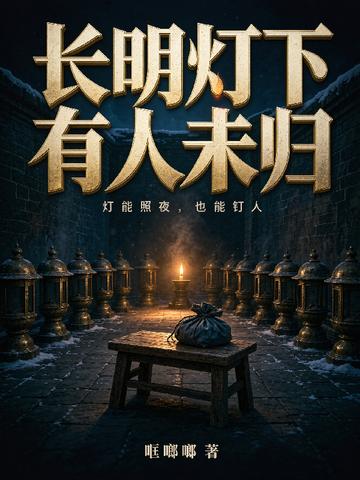
Someone Has Yet to Return Beneath the Everlasting Lamp · Synopsis
There is a shop called Nightwatch Lamps in Heishuitun, selling the plainest guide lamps. After his master, Zhou Yan, leaves, young Song Huai takes over the shop and inherits three rules: never remove the sign, never raise the prices, and keep an eye on the lamp in the back courtyard.
Fifteen bronze lamps line the wall in the back courtyard. Fourteen are extinguished, while the innermost one burns without end. His master’s ledger records no money, only “what each household fears”: the Zhao family fears the third watch, the Li family fears hearing someone cough. Song Huai slowly understands that these lamps do not light up houses. They shine on the breath in people’s hearts that keeps them from closing their eyes.
Legend tells of a lamp that, once lit, burns steadily and lets people see the dead. But his master once said, “That isn’t a lamp. It’s a grave. Anyone who enters can’t get out.” Arou sits beneath the lamp, clutching her empty arms, and says she would rather never wake; in an abandoned temple in the north, an old woman keeps her husband alive for three years; in a lamp market in the south, an everlasting lamp sells for twenty taels, and its buyer spends everything just to see his dead mother once more.
Song Huai travels north to seek out his grandmaster, Cheng Shouzhuo, and south to pursue the lamps carried away by that cart. In the end, he returns to the entrance of his own village: the first name on the craftsmen’s roster is Cheng, left blank for twenty years.
A lamp can light the night, and it can pin people in place. The hardest thing in this world is not lighting it, but extinguishing it with your own hands, then carrying on with life.