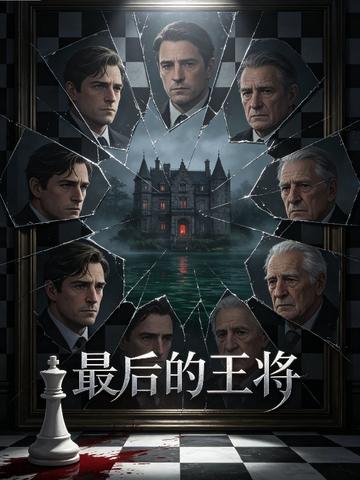
Retired detective Philip Hadley receives an anonymous letter that lures him to a manor on a fogbound island. Six guests, seven place settings, the head seat empty, wine glasses filled to the brim. That night, someone dies. Their skull is crushed by an iron clamp, and a white chess piece lies in their palm. The board is numbered H-02.
From then on, the deaths unfold one by one according to the rules of a chess game. Everyone has a chess piece. Everyone has a number. Philip does too. H-07. Seven people, seven pieces, and a game left unfinished.
Philip begins his investigation. He examines the bodies, analyzes the surveillance footage, tracks footprints, and deduces the method. His investigation is professional. His deductions are precise. The chain of evidence closes, piece by piece. The killer draws closer, step by step.
There is only one problem: every detail he investigates is real. The evidence is real, the method is real, and nearly all of his deductions are correct. The only mistake is that he automatically left himself off the list of suspects.
It is not that he is evil. It is not an act. His brain filters out the idea of himself even as he is looking.
The detective's instincts he has trained for thirty years have been commandeered by his deepest self-preservation mechanism. The more diligently he investigates, the more he cleans up the traces for the real killer: himself.