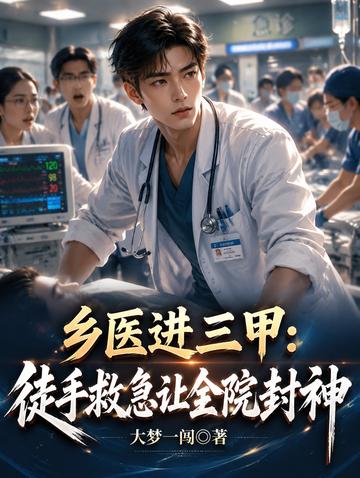
Gu Yanchuan worked in a township health center for 20 years, and passed the examination to enter the top three emergency departments in the provincial capital. However, because of his ordinary education and rural background, he was ridiculed as a "barefoot doctor" by his colleagues.
On the first day of admission, a series of injuries occurred in the emergency room.
The equipment alarmed, monitoring failed, and the patient's airway was completely blocked.
Everyone was waiting for the high-end equipment to be restored, but Gu Yanchuan fully activated his 20 years of local first aid experience under extreme pressure.
The first reward is to help a dying patient breathe again.
He can judge circulatory changes based on the color of his skin, locate obstructions based on his breathing sounds, stop bleeding with his bare hands based on his feel, and use the simplest method to save the most dangerous lives.
But the real test of a tertiary emergency room is far more than an equipment failure.
Questions about authority, academic discrimination, and process disputes came one after another. Every time Gu Yanchuan rescued someone, the ridicule of the "barefoot doctor" became louder, and the outlook of the entire department completely changed.
When a large-scale emergency hits the emergency department, all conventional equipment is overloaded, expert plans cannot be implemented, and everyone can only watch as patients lose vital signs one after another.
Gu Yanchuan rolled up his sleeves and stood at the front.
"The equipment will stop, but the experience will not. As long as the person is not dead, emergency treatment cannot be given up!"
With many years of local experience, he has begun to challenge the arrogance of the top three companies in the city head-on.
"Academic qualifications can prove where he has been, but they cannot determine who can save the patient."