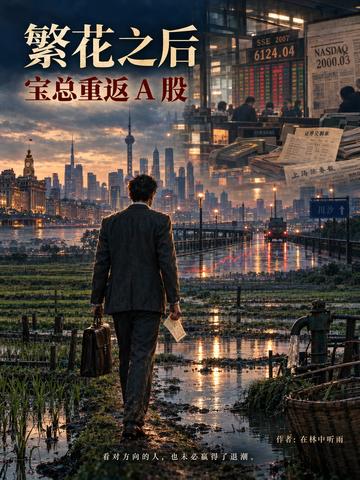
After 1997, A Bao, once a force to be reckoned with on Shanghai's Huanghe Road, retreated to the fields of Chuansha in Pudong. In the winter of 2000, a phone call from Hong Kong pushed him back into the spotlight. The Nasdaq bubble was bursting, while the farm was short of water pumps, payroll money, and cold storage. To save the cooperative, he sold his tech stocks too early and buried the name "Mr. Bao" in the dirt once again. In 2005, the split-share structure reform began. Miss Wang brought him reform documents for Shenjiang Electromechanical, but an old guarantee had somehow grown from 600,000 yuan to 2.6 million. With a trade confirmation in hand, A Bao returned to a Shanghai brokerage office, placing his bets once again amid announcements, votes, T+1 settlement, and debts of obligation. With the 2007 bull market approaching, Fang Dai raised funds under the banner of "Mr. Bao's return," while A Qiang staked his renovation money on hope. Calling the market right doesn't guarantee a profit, and sticking to your principles doesn't guarantee you can keep your friends. Before the index hits 6,000, Mr. Bao must answer one question: this time, has he returned to make money, or to repay his debts?