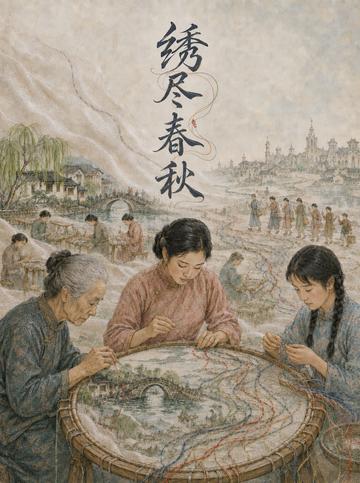
In the first year of the Republic of China, Shen Xiuning was born into an embroidery family in Suzhou. She grew up surrounded by silk threads, stretchers and the sound of stitches, but gradually discovered that behind those exquisite embroideries, there were many women who had never been remembered: they spent their eyes and time, but their names were often concealed, and their skills could only rely on oral teaching, struggling to continue in the turbulent years.
From Jiangnan embroidery studio to war-torn displacement, from old-style workshops to cooperative organizations, from nameless embroidery to real-name archives, Shen Xiuning and generations of embroiderers such as Lin Suyun, Zhou Xiaolian, Axiu, etc. Face family rules, industry prejudices, changes in the times, and the loss of skills. What they protect is not only the craft of Suzhou embroidery, but also every worker's right to be seen and recorded. At the same time, Lu Jingchuan's drawings and letters traveled through the long years, accompanying Shen Xiuning in his continuous choices between ideals, separation and reunion.
A piece of silk thread can embroider the smoke and water of Jiangnan, and can also connect the fate of decades. "Embroidered Bones Jiangnan" takes the rise and fall of Suzhou embroidery as its sutra, and women's growth and group inheritance as its weft. It depicts how a group of ordinary embroiderers preserved their skills and fought for their names in the tide of the times, and spent their lives answering: Should the real inheritance leave behind works, reputations, or those who once held the needle?