In the nineteenth year of the Republic, his father left behind a bronze fragment and then vanished without a trace.
Fifteen years later, Chen Xun became a feng shui master. He read the land, located dragon veins, and even entered tombs.
It wasn't until he dug open a "moving tomb" that he discovered what was buried inside wasn't a corpse, but a bronze fragment engraved with the Big Dipper.
On its back were the seven words his father had left behind:
"When the seven stars gather, the bronze gate will open."
Seven ancient tombs, seven fragments. Something is waiting for him inside every tomb.
White-haired corpses, black-haired corpses, red-haired corpses... Each challenge is more deadly than the last.
But Chen Xun knows his father walked this very path all those years ago.
He has to keep going, to find his father and to see for himself...
what lies beyond the bronze gate.
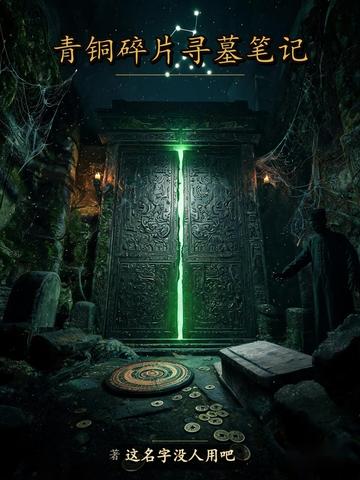


I came across this book in passing, and ended up staying up for three nights to finish the first fifty chapters. The "moving tomb" at the beginning immediately stunned me - what Chen Xun dug up was not a corpse, but a bronze fragment engraved with the Big Dipper. The protagonist is not a cheating man, but a "craftsman" who takes the bronze piece left by his father and relies on the Feng Shui compass to go to the tomb step by step. Every time it is a real game. The monster design is really particular: the white-haired corpse, the hairless and pupilless tomb-suppressing corpse (that part gave me goosebumps), the water monkey in the underwater tomb, the red hair hanging on the coffin cliff... Each tomb is more evil than the other, but each type has its own rules, and it is not a mindless pile of horror. The supporting character Bai Yu doesn't show off his wits either, he should be cowardly and he should be ruthless. The most stable thing is the foreshadowing - the extra circle on the compass and the seven words left by my father, "Seven stars gather, the bronze door opens." In the first fifty chapters, four fragments (Yaoguang, Tianshu, Tianxuan, Tianji) have just been collected, and the door is still far behind. Catching up, waiting for the next three pieces.