For three thousand years, people have laughed at The Classic of Mountains and Seas as nothing but mythology.
But the more Jiang Heng reads, the colder he feels. It isn't mythology. It's an instruction manual no one has ever understood.
One night, he made a post.
Sixteen minutes later, it exploded onto the trending charts out of nowhere. No big-name influencer, no one boosting it, just traffic flooding the homepage from a source he couldn't trace. At the very bottom of the comments was a single line: Don't investigate.
Someone didn't want him looking into it.
A netizen who only appeared late at night, calling themselves Night Ferry, offered him a key in one hand and a dose of sleeping pills in the other. One night, they said, “Go see.” The next, “Don't go.”
His advisor, Yan Suzhen, turned the matter into a research project. Five students with wildly different interests were thrown together in the department office: Jiang Heng, who obsessively pored over old texts; the sharp-tongued Xiang Chuan; Kong Zhishu, from a family of traditional Chinese doctors; Mo Yanci, heir to the Mohist tradition of mechanical ingenuity; and Sun Xiaoye, with all sorts of unconventional connections. No funding, no certainty, just one instruction: “Go see the sites for yourselves.”
So they did. The Dunhuang caisson ceilings, German stained-glass windows, Samarkand's pearl roundel patterns, the naga balustrades of Angkor, the pits on Mount Juci: every site could be researched and visited.
The farther they went, the stranger things became. Their applications were repeatedly blocked, yet anonymous documents somehow kept finding their way into their hands, page by page. The same symbol appeared eight thousand kilometers away, looking exactly alike in civilizations that had never known each other. Someone always tried to stop them, but someone else always provided the crucial page.
Three rabbits share three ears, chasing one another in circles forever without catching up. Only later did Jiang Heng understand: the rabbits weren't the only ones who couldn't catch up.
(Most of the place names, ancient texts, myths, legends, and historical sites in this novel are real and can be verified. The characters and plot are entirely fictional and intended for entertainment only. Any resemblance to actual people or events is purely coincidental.)
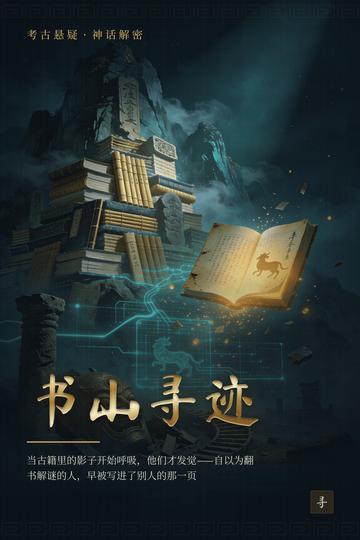




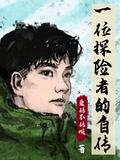





First, self-affirm your own book and give yourself a first review. This is a story about discovering a mystery through myths, legends and historical books, and then searching various ruins to unlock the answer. Basically, the endings of this suspenseful exploration type of story are similar. The main thing is that the process needs to be exciting. Just think of it as a journey using books as blind boxes. I hope it will attract people to read.