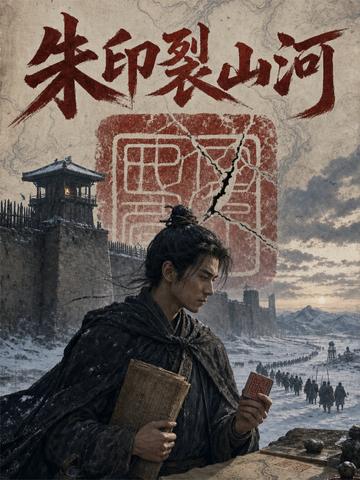
In the fourth year of Zhengguang's reign in the Northern Wei Dynasty, the six towns were in chaos.
In the wind and snow of Huaishuo, three conflicting military orders arrived at the same time. Zhao Guanqi, a junior official in the military government, discovered from this: Some people were mobilizing border troops in the name of the imperial court, and some were using a piece of official document to decide the life and death of tens of thousands of people.
He doesn't know how to rush into battle and kill generals, and he doesn't have a magic weapon in his hand.
The only things he relied on were the news on the post road, the rosters in the military tents, and the desires in people's hearts that could not be revealed to others.
Forging military orders, buying off scouts, alienating generals, and uniting the weak against the strong - from the war in the six towns to the chaos in Hebei, from the bloodshed in Heyin to the separation of the two Wei Dynasties, Zhao Guanqi stepped into the world of chess step by step. He once protected an isolated city with a letter, and destroyed a strong army with a rumor; he could calculate the food routes, military strength, and alliances, but gradually he couldn't figure out whether those people he wrote into the death register were a necessary price or their own sins.
When the mountains and rivers were shattered and old friends were each their own masters, Zhao Guanqi finally understood:
The sharpest thing in troubled times is never the sword, but the piece of paper stamped with the red seal.
It's just that every time I write, someone will never go home again.
Reader comments
They are all ineffective descriptions and dialogues. After reading two chapters, I don't know what the author wants to write? . Maybe the author himself doesn't know what to write.
They are all ineffective descriptions and dialogues. After reading two chapters, I don't know what the author wants to write? . Maybe the author himself doesn't know what to write.