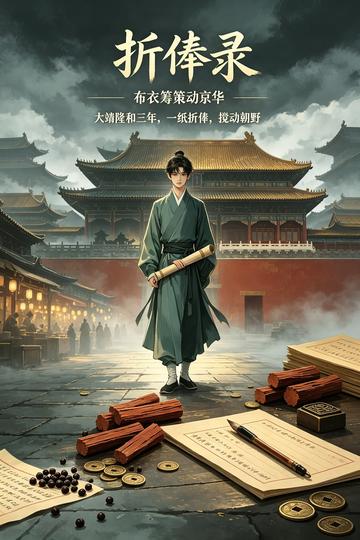
The treasury of the Great Jing Dynasty is empty, so officials' salaries can only be paid in pepper and sappanwood. But market prices plummet, leaving lower-ranking officials unable to sell their goods, while the goods of high-ranking officials are snapped up. This indirectly leads to the common people being squeezed even harder.
Shen Yan grew up poor in the city, but carved out a career for himself and learned how to do business. After three years working at a trading house, he fell out with its owner over their differing principles. Later, the chief minister's steward recognized his talent, and after personally evaluating him, the chief minister promoted him against the usual rules. Shen Yan introduced targeted distribution and government-run processing to increase the goods' value. Though this temporarily resolved the problem of officials' salaries, it angered the powerful, and he was eventually framed and stripped of his post.
Afterward, he continued doing business in ordinary clothes. Even after all sorts of trials, he never forgot his original purpose...
Inspired by a historical event in which the Ming court, during a certain period, used pepper and sappanwood stockpiled in the treasury to pay officials' salaries and ease fiscal pressure, this book reimagines the story from a different perspective.