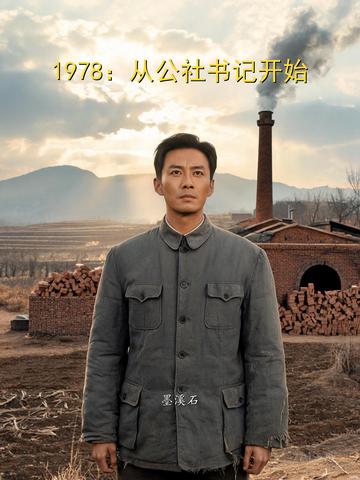
In the winter of 1978, on the day when the communiqué of the Third Plenary Session of the CPC Central Committee resounded across the land of China, Lu Yuanzhou, director of the Industrial Division of the Provincial Development and Reform Commission, died suddenly in the conference room. When he opened his eyes again, he became the young secretary of Qingyun Commune.
The commune was in debt of 30,000 yuan, the brick and tile factory ceased production, the agricultural machinery factory was reduced to a pile of scrap metal, and the members of 120 households could not even afford coal for the winter.
But Lu Yuanzhou holds forty-six years of industrial memories in his mind.
He knows that Red Brick will usher in a golden decade, knows that the agricultural machinery market will grow explosively, knows the opening and closing timing of every policy window, and knows the ups and downs of every technology iteration.
Starting from a wheel kiln, starting from a scrapped Dongfanghong tractor, starting from the first threshing machine dug out of the scrap pile.
The word "Qingyun Brand" has been written from commune workshops to provincial industrial parks, from agricultural machinery to electronic components, and from auto parts to semiconductors.
As for those who stood in front of him, some called him "reformers", some called him "capitalist roaders", some shook hands in front of his face, and some stabbed him in the back.