Part One: His name is Chen Xing.
He crawls out of a heap of corpses in Wuhan and slips into Shanghai’s web of spies.
In three years, he rises to become the youngest deputy chief of the second division in the Shanghai branch of the Military Statistics Bureau.
He is “Jingzhe,” an agent quietly embedded in enemy territory.
During his years undercover, he faces the Japanese, traitors, puppet troops, and power struggles within his own ranks.
Knives in plain sight, guns in the shadows, his life hanging by a thread.
Then, in August 1945, Japan surrenders.
He thinks he can put his knife away.
Instead, an even deadlier one is handed to him.
This time, the people holding the knives are Chongqing’s officials sent to take over, secret agents from the Central Bureau of Investigation, and intelligence officers from Britain and America.
They don’t want Shanghai.
They want Chen Xing dead.
Because he knows Shanghai too well.
So well that everyone preparing to come to Shanghai and carve up the spoils is left on tenterhooks.
That is what Part Two is about:
On the day of victory, Chen Xing goes from “war hero” to “Communist-sympathizer suspect.”
But he doesn’t run.
He stays in Shanghai and splits the Military Statistics Bureau’s files into seven parts, hiding them in seven corners of the city.
Then he says:
“I’ll make sure everyone who comes to Shanghai walks the path I’ve laid out for them.”
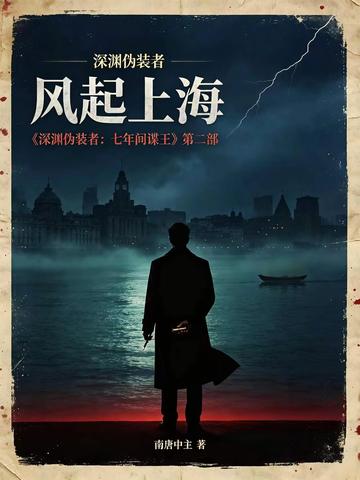
The second volume of The Abyssal Impostor: Seven-Year Spy King.
It can be read on its own. But if you’ve read the first volume, you’ll understand even better why Chen Xing cannot afford to lose.

Looking at it slowly, I can see that the beginning is relatively stable and it is written step by step. In addition to creating a tense situation at the beginning, the follow-up gradually advances on this tight string, and the rhythm is more clearly grasped. The author's writing skills are passable, especially the psychological description and atmosphere description are relatively delicate, and the tension is well controlled. Unlike some similar spy novels, which repeatedly create the same tense attack and defense, it seems that one climax follows another, but in fact it is just a copy and paste of the plot without changing the contents. Or it's a long, loose and irrelevant article, such as a large section of memories that is completely out of place, or unnecessary entanglements or emotions between men and women. Keep reading, I hope there will be surprises, and I hope the author enjoys writing!
The plot is coherent, and there is a professional and calm atmosphere amid the tension.
It's good to read. It's best to start reading from the first part so that you can see the continuity. Otherwise, people who read it for the first time will be a little bit behind [][][]
Waiting for the second part. Okay, looking forward to it.
A very good book
The description of the environment is good, but the plot advancement is not smart enough
Good looking, worth spending time