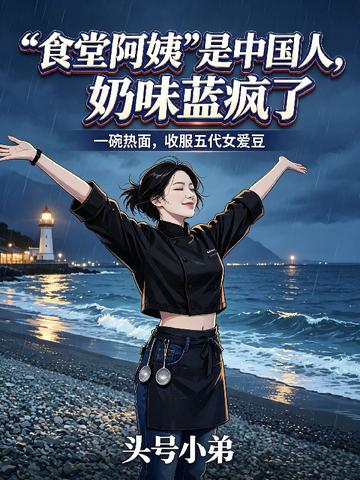
Deep in Cheongdam-dong, there’s a little alley that even navigation apps can’t find. At the end hangs an old wooden sign with four characters on it: The Late-Night Bistro.
The owner is Su Wan, twenty-six, once the youngest head chef at a time-honored restaurant in Beijing. After her mentor passed away, she brought an old notebook filled with more than three hundred lost recipes and came alone to Seoul. She doesn’t advertise or take tour groups. She makes only eight dishes a day, and closes once they’re sold out. The most precious things in the restaurant are an old, out-of-tune piano and the light by the door that stays on until the early hours.
No one knows why she came to Korea. No one knows whom she’s waiting for.
Then one rainy night, a girl in a black hoodie and a face mask opens the door and says in halting Chinese, “I… want to eat Chinese food.”
Su Wan serves her a bowl of the most ordinary tomato and egg noodles.
The girl takes a bite, and her eyes redden.
Her name is Yeh Shuhua.
Later, four more chatty regulars start showing up. One writes the song she’s been stuck on for ages. Another sets aside her leader’s armor. Someone else learns how to eat properly again. They call Su Wan “the cafeteria auntie,” and treat the little bistro in the alley as a second home.
And Shuhua comes by more than anyone. She doesn’t come for the food.
She comes to keep a date she can’t even explain to herself.
A bowl of noodles, a light left on, someone waiting for you to come home.
Su Wan says, “I knew it when you came in the first time.”
Shuhua says, “And you still wait for me every day.”
Su Wan smiles. “Because you said you’d come back.”