(An ancient-style mystery: not mindless, no harem, no System, and not a conventional power fantasy. Readers who prefer otherwise, proceed with caution.)
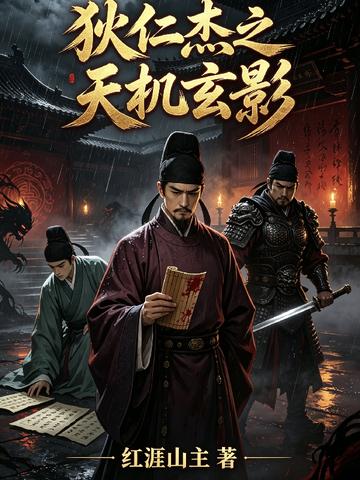
In the winter of the third year of Shengli under the Wu Zhou, a hundred miles of the Luo River outside Luoyang lie frozen solid. Within seven days, seventeen elderly river-construction workers die one after another. Their bodies bear no wounds, and their faces are peaceful, but each has a pitch-black snake pattern in the palm that cannot be washed away. Rumors spread through the streets: the vengeful spirit of the Snake Spirit is claiming lives, and Heaven’s punishment has descended upon the Luo River region.
Di Renjie and Li Yuanfang investigate the case, discovering that every victim was a key laborer involved in the Snake Spirit’s construction of an underground canal five years earlier. Shen Ya, a young clerk, enters the investigation carrying fragments of old diagrams by Li Chunfeng, handed down in his family. Using his sophisticated knowledge of poisons, he exposes the “ghostly markings and divine punishment” as a sham. But as he digs deeper, he stumbles upon an even more horrifying truth: beneath the frozen surface of the Luo River, deep in an ancient canal built during the Zhenguan era, lies a black spring that even Li Chunfeng never recorded publicly.
Something is breathing inside the spring.
As rival factions, imperial schemes, subterranean poisons, and ancient canal mechanisms are gradually uncovered, a century-old conspiracy comes to light. It spans two generations and uses the secrets of heaven to deceive the world and the waterways to throw the dynasty into chaos. Shen Ya discovers that the snake pattern growing in his palm is connected to the darkness at the bottom of the spring by a thread that can never be severed.
All things are illusory; only the human heart is real. There are no ghosts, gods, or divine punishments in this world, only the schemes of mortals. Once every trick has been exposed and every truth laid bare, Shen Ya finally understands the weight of his father’s dying words: Yuan Tiangang was merely the one who copied the drawing. He was not the one who drew the plans.