She once thought that by restraining herself and returning to ritual, she would be able to find stability in the deep palace.
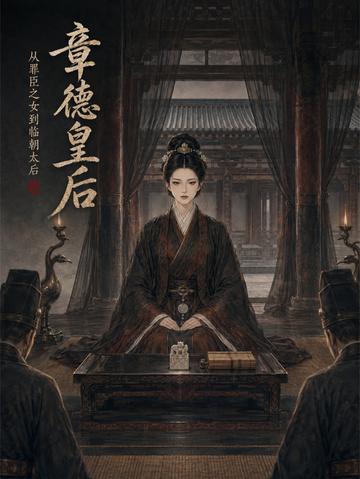
After Dou Shu, the daughter of the guilty minister, entered the palace, she followed the Mingde Queen Mother as a model, read books, knew etiquette, and was cautious and self-possessed. Until she discovered that Queen Mother Ma's selflessness also had a sharp edge - she would be forbearing when there was no opportunity, but she would fight for it when the opportunity came. She finally understood that the harem was never a place only about virtue.
Empress Dowager Ma died, and Liu Qing, the son of a noble man of the Song Dynasty, was established as the prince. Even though she was a queen and had an adopted son Liu Zhao, Dou Shu still felt deeply uneasy. She joined forces with Cai Lun, her brother Dou Xian, and her mother, Princess Xianyang, to eliminate the Song family and depose Liu Qing. She also allowed Dou Xian to eliminate the Liang family who was secretly celebrating, and finally promoted Liu Zhao to the reserve position. She was in charge of the harem alone, and her favors grew. She also watched the Ma family who had lost their restraints be expelled from Luoyang, and gradually understood why the Queen Mother Ma always suppressed her mother's clan.
Emperor Zhang died, Liu Zhao ascended the throne, and Dou Shu came to serve as regent. Only then did she see clearly: ministers, clan members, and relatives were all without selfish motives, but the most trustworthy and useful ones were still her blood relatives.
However, when Dou Xian's power was overwhelming and the Dou family was on the verge of collapse, she had to cut off the arm she relied on most with her own hands and secretly help her adopted son regain the imperial power - not only to preserve the Dou family, but also to protect the world she had raised with her own hands.
Reader comments
On the basis of respecting history, the author's own imagination is incorporated to fill in the gaps in the characters' mental journeys. The brush strokes perfectly combine the romantic temperament of Chinese aesthetics and the weight and length of classical literature.
On the basis of respecting history, the author's own imagination is incorporated to fill in the gaps in the characters' mental journeys. The brush strokes perfectly combine the romantic temperament of Chinese aesthetics and the weight and length of classical literature.