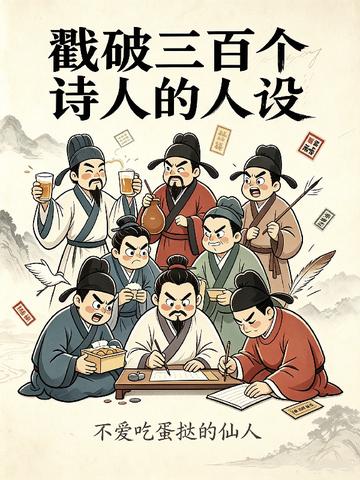
The poets in our textbooks are practically immortal beings.
Li Bai’s “How could I bow and scrape to serve the powerful?” shows his proud, unyielding spirit.
Du Fu’s “If only I could build a million spacious houses” reveals his concern for the common people.
Bai Juyi’s “I sing only of the people’s suffering” shows how he spoke up on their behalf.
But the textbooks never tell you that...
Li Bai married into two families, spent two years unemployed in Chang’an, and eventually relied on fans to get by.
Du Fu wrote fifteen poems for Li Bai and got only three replies.
Bai Juyi condemned the imperial market in “The Old Charcoal Seller,” yet he himself was enamored with song and dance, replacing his household performers three times in ten years.
This isn’t their public images falling apart. It’s simply another side of them as ordinary people.
Their poetry was real, their ideals were real, and so was their talent.
So were their poverty, awkward moments, humiliations, and double standards.
This book isn’t here to tear the poets down.
It’s here to restore the humanity of people who have been deified for a thousand years.
They weren’t above it all. They were flesh and blood, with laughter and tears.
Once you know all this, you’ll only love their poetry more.