In the leap six months of the first year of Hongguang, Nanjing had fallen, Emperor Hongguang was captured, and King Lu opened the city and surrendered to the Qing Dynasty.
In Shaoxing, eastern Zhejiang, Zhang Guowei, the former Minister of War in the Ming Dynasty, wore sackcloth and wore filial piety to welcome Zhu Yihai, King of Lu in Taizhou, to supervise the country.
At this time, Zhu Yihai only had the four prefectures of Shaoxing, Ningbo, Taizhou, and Wenzhou, two proud soldiers, Fang Guoan and Wang Zhiren, an empty prison seal, and the Qiantang River lying in front of him.
Four towns in the north of the Yangtze River have surrendered, Zuo Liangyu's son has surrendered, and Shi Kefa is stained with blood in Yangzhou - the banner of Prince Duduo of Yu, the Qing army, is pressing down the canal towards eastern Zhejiang.
At the same time, Zhu Yujian, the king of Tang Dynasty in Fujian, was also called the supervisor of the country and changed his name to Longwu. "Establish marriage" or "establish virtuous people"? The internal strife between Zhejiang and Fujian dynasties over their orthodoxy came earlier than the Qing army.
Zhu Yihai stood on the bank of the Qiantang River, behind him were a group of proud soldiers waiting to be paid, a group of civil servants vying for power, and a group of gentry still watching.
He only had one thought: In this life, he would never run away first.
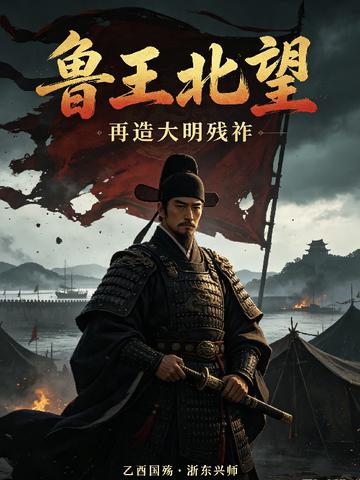
"The ministers are facing south, but the king is alone in the north." - King Lu looked north, which was the first year of Lu's supervision of the country.
Good-looking, good-looking, good-looking, good-looking