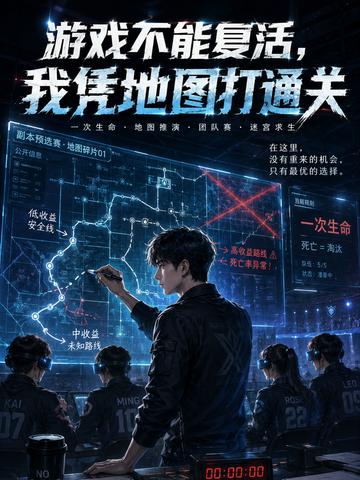
Introduction to the work begins]
Lu Chenzhou, a retired team map analyst, sat back in the holographic cabin and led a newly formed team to participate in the official zero-life event: each team member has only one life in a stage and cannot be resurrected after death; and the dungeon map will continue to change as the team opens doors, takes objects, and seizes resources. Lu Chenzhou did not foresee the plug-in. He could only deduce the risks from public map fragments, front team videos and on-site traces. In the first round, he kept the team by giving up high profits, but soon discovered that the previous champion Obsidian was using the "once correct" route to influence everyone's judgment. What's even more dangerous is that he himself once destroyed his old team because of his superstitious belief in the optimal route. Facing a changing maze, opponents who take the initiative to counterattack, and the hard cost of one life, Lu Chenzhou must learn to let the map serve the team instead of letting the team obey the map. From low scores in the preliminaries to the finals of the main event, they relied on map deduction, resource abandonment, on-the-spot feedback and constant route changes to compete for the only exit.