Amidst the roar of the tiger, I awakened the ability to control incense.
In the three realms, those who can control incense are either gods, Buddhas, or demons.
I am not a god, a Buddha, or a demon.
The City God said: Your soul does not belong to the six paths of reincarnation.
Sun Wukong said: The power in your soul is something that few people in the Three Realms have.
It took me three days to figure out one thing:
Ninety percent of the incense of the Three Realms is in the hands of the Six Saints.
The incense burned by mortals, the wishes of the dead souls in the underworld, and the origins left over from the prehistoric times have all been monopolized by them for three thousand years.
And I, a mortal who doesn't even have the realm of cultivation, have awakened the ability that they least want to see.
Heaven sends people, I will fight back.
Lingshan sent people here and I burned them back.
The judge of the underworld handed over a black account: the Six Saints intercepted the incense of dead souls from reincarnation every year for more than a million years.
I closed the account book and said:
"Spit out everything you swallowed."
The projections of the Six Saints condensed on the sky, and all the forces in the three realms were watching.
Sun Wukong led an ambush of 300,000 demon soldiers, squatting in the dark.
Houtu is in the depths of reincarnation, waiting to wake up.
And I was in front of the ancient altar, and the golden incense source in my palm was burning.
Three days later, Cangwu Ancient Land.
I want to break the bread again in front of the six saints.
Reader comments
**Recommend a book called "Xianhuo Liuxianxia" that made me stay up until three o'clock**
The setting of this book is the most outrageous I have ever seen - so outrageous that after reading it, I felt uncomfortable looking at other immortal heroes.
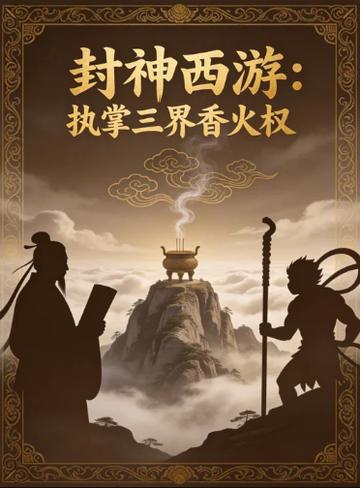
Book Title: "Feng Shen Journey to the West, I Want to Divide the Cauldron"
Platform: Tomato
Word count: One million words, continuously updated
**Why recommended? **
**1. The worldview has "underlying logic"**
Generally speaking, when Xianxia writes about conferring gods, it explains internal strife, and when writing about Journey to the West, it reflects the eastward expansion of Buddhism. But this book tells you: Fengshen is a business bureau where the Six Saints teamed up to carve up the incense market, Journey to the West is a conspiracy to overturn Lingshan, and the Eighty-one Difficulties are a stumbling block set up by Heaven - with each additional difficulty, Buddhism burns an extra pool of merit.
Heaven governs this life, and Lingshan governs the next life. Two economic systems are competing for the same piece of cake. Who are you burning incense for? Heaven takes it away to strengthen the present world, and Lingshan deposits it into the next life for realization. All sentient beings have been cut for three thousand years, but they still don't know that they are like leeks that have been cut.
**2. The protagonist is really a "worker counterattack"**
There is no system, no sign-in, and no grandpa. The protagonist starts from the Earth Temple, relies on a set of business logic of "separation of incense", and gradually becomes the city god and judge, and finally overthrows the monopoly system of the Six Saints.
He conquered the dragon clan not with his tyranny, but with a contract to share the fragrance. He did not rely on favors to win over the underworld, but allowed Hou Tu to see the opportunity for reincarnation and independence. He negotiated with the Heavenly Court not to rely on strength to crush him, but to let the Jade Emperor settle a score - it is better to be a human being himself than to continue to be a dog to the Six Saints.
**3. Dense and dense, no water added**
Each chapter is about 2,000 words, with dialogue accounting for more than 60%, so the word count is not limited and the plot is not delayed. There must be a hook in the first 300 words, and there must be a twist at the end of each chapter. The author is suspected to be an old Tomato author, and his rhythm is very stable. After a million words, not a single chapter is useless.
**Suitable for:**
- Readers who are tired of watching sign-in flow and system flow
- Readers who are familiar with the theme of Fengshen Journey to the West
- Readers who like "business reciprocity" type protagonists
- Readers who want to see "subversion of classic" settings
**Summary in one sentence:** This book is not about cultivating immortals, but about how to carry out an incense market economic reform in the three realms monopolized by the Six Saints.
Do you think that being a god is just a matter of internal strife? Is Journey to the West a Buddhist missionary?
Wrong.
Conferred God is a game in which the Six Saints join forces to carve up the incense market. Journey to the West is Lingshan's plot to turn things around. The eighty-one difficulties are a stumbling block set by Heaven. For every additional difficulty, Buddhism will burn an incense budget.
The protagonist travels back in time, starting from the Earth Temple and working his way up to the City God, only to find that all the incense in the Three Realms is monopolized by the Six Saints. Heaven governs this life, Lingshan governs the next life, and all living beings are like leeks that have been cut for three thousand years.
He didn't want to be a leek, so he overturned the table.
There is no system, no sign-in, only a set of business logic of "incense and account sharing" to force the Six Saints to rebuild the economic order of the three realms.
"Fengshen Journey to the West, I Want to Divide the Cauldron" is currently being serialized on Tomato, and has one million words, so the volume is huge.
**Recommend a book called "Xianhuo Liuxianxia" that made me stay up until three o'clock** The setting of this book is the most outrageous I have ever seen - so outrageous that after reading it, I felt uncomfortable looking at other immortal heroes. Book Title: "Feng Shen Journey to the West, I Want to Divide the Cauldron" Platform: Tomato Word count: One million words, continuously updated **Why recommended? ** **1. The worldview has "underlying logic"** Generally speaking, when Xianxia writes about conferring gods, it explains internal strife, and when writing about Journey to the West, it reflects the eastward expansion of Buddhism. But this book tells you: Fengshen is a business bureau where the Six Saints teamed up to carve up the incense market, Journey to the West is a conspiracy to overturn Lingshan, and the Eighty-one Difficulties are a stumbling block set up by Heaven - with each additional difficulty, Buddhism burns an extra pool of merit. Heaven governs this life, and Lingshan governs the next life. Two economic systems are competing for the same piece of cake. Who are you burning incense for? Heaven takes it away to strengthen the present world, and Lingshan deposits it into the next life for realization. All sentient beings have been cut for three thousand years, but they still don't know that they are like leeks that have been cut. **2. The protagonist is really a "worker counterattack"** There is no system, no sign-in, and no grandpa. The protagonist starts from the Earth Temple, relies on a set of business logic of "separation of incense", and gradually becomes the city god and judge, and finally overthrows the monopoly system of the Six Saints. He conquered the dragon clan not with his tyranny, but with a contract to share the fragrance. He did not rely on favors to win over the underworld, but allowed Hou Tu to see the opportunity for reincarnation and independence. He negotiated with the Heavenly Court not to rely on strength to crush him, but to let the Jade Emperor settle a score - it is better to be a human being himself than to continue to be a dog to the Six Saints. **3. Dense and dense, no water added** Each chapter is about 2,000 words, with dialogue accounting for more than 60%, so the word count is not limited and the plot is not delayed. There must be a hook in the first 300 words, and there must be a twist at the end of each chapter. The author is suspected to be an old Tomato author, and his rhythm is very stable. After a million words, not a single chapter is useless. **Suitable for:** - Readers who are tired of watching sign-in flow and system flow - Readers who are familiar with the theme of Fengshen Journey to the West - Readers who like "business reciprocity" type protagonists - Readers who want to see "subversion of classic" settings **Summary in one sentence:** This book is not about cultivating immortals, but about how to carry out an incense market economic reform in the three realms monopolized by the Six Saints.
Do you think that being a god is just a matter of internal strife? Is Journey to the West a Buddhist missionary? Wrong. Conferred God is a game in which the Six Saints join forces to carve up the incense market. Journey to the West is Lingshan's plot to turn things around. The eighty-one difficulties are a stumbling block set by Heaven. For every additional difficulty, Buddhism will burn an incense budget. The protagonist travels back in time, starting from the Earth Temple and working his way up to the City God, only to find that all the incense in the Three Realms is monopolized by the Six Saints. Heaven governs this life, Lingshan governs the next life, and all living beings are like leeks that have been cut for three thousand years. He didn't want to be a leek, so he overturned the table. There is no system, no sign-in, only a set of business logic of "incense and account sharing" to force the Six Saints to rebuild the economic order of the three realms. "Fengshen Journey to the West, I Want to Divide the Cauldron" is currently being serialized on Tomato, and has one million words, so the volume is huge.