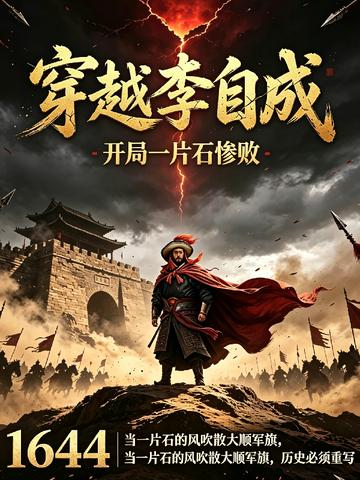
I wake up as Li Zicheng.
Defeated at Shanhai Pass, I have twenty thousand battered troops, with the Qing cavalry hot on my heels. Around me are a bunch of arrogant, hard-bitten generals: some want to flee, some want to surrender, and some are sharpening their blades, ready to betray me for their own gain.
A nightmare from the start.
But I'm a transmigrator, and I know how history is written. In a few months, the Qing army will invade Shanxi, Taiyuan will fall, Li Zicheng will be defeated at Jiugong Mountain, and the Great Shun will be wiped off the map.
Then I'll change it.
Redistribute the land, train the troops, make land mines; build a shrine to the loyal and fallen, construct an observatory, grow corn.
The day the Qing army reaches the city walls, every inch of Shanxi's soil will be packed with explosives.
They say that when King Chuang arrives, he doesn't collect grain. I say:
When the Manchus of Jianzhou arrive, not one of them will make it back alive.
It has a grand view of history, rigorous textual research, three-dimensional character creation, interesting points, and a high level of military and political description.
The description is quite detailed, and the opponent's IQ is still online.
There are too many people traveling through Chongzhen. Finally, an author wrote about Li Zicheng.
The content of the book is relatively solid, giving people an immersive feeling when reading it.
The plot is tight and the killings are decisive. It's difficult to divide a paragraph into paragraphs.