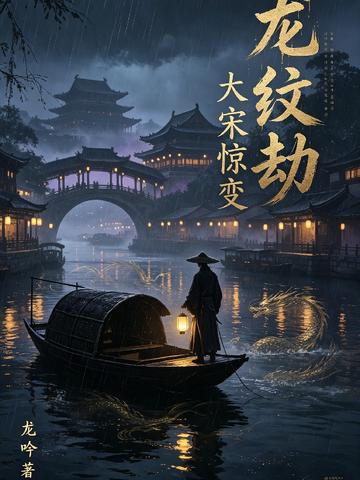
Introduction to the work "Dragon Pattern Tribulation: Shocking Changes in the Song Dynasty"
In the second year of Yuanfeng in the Northern Song Dynasty, Su Shi was exiled to Huangzhou.
Someone tampered with his poem and changed "A plow of spring rain" into "March without salt", and the charge was changed from satire to treason.
Beheading, the seventh day of September.
A person who shouldn't be here woke up in Bianjing Prison. The ancient jade on his collarbone was burning hot, as if to warn him: history has been changed.
As "Shen Du", he lurked in the court and discovered that those who had tampered with poems were only the tip of the iceberg. They secretly transferred military supplies, forged secret letters of collaboration with the enemy, the Liao Kingdom's "Fuhu Contract" dark network, and Xixia's "Shadow Palace" dead soldiers. The sword pointed at Bianjing, Liao Kingdom, and Xixia at the same time.
But in the dark, the transcendent force "Tianji Pavilion" has laid out a thousand-year chess game. The power of dragon veins, the secrets of time and space, and the hatred of the Southern Tang Dynasty are all tied to the pattern on his collarbone.
Seven days countdown, attacked from three sides, alone for two lifetimes. When Shen Du finally stood in front of the Dragon Vein Gate, he realized that he had traveled through the millennium not to change history, but to end a fateful reincarnation that had trapped seven generations of people.
"The dead are like this, but they are not gone yet." When these words were spoken, the stone door that had been locked for thousands of years was loosened.
Reader comments
The Wutai Poetry Case is the most thrilling literary inquisition in the Northern Song Dynasty, but few people have written it into a suspenseful plot novel. This book uses a seven-day countdown to intertwine Su Shi's life and death with a conspiracy spanning the munitions case, the Liao dark network, and the Xixia Shadow Palace. The time traveler Shen Du has no golden fingers. Every step he takes steps in the gaps of real history. The chains must be broken by oneself, and the evidence must be found by oneself. If the evidence cannot pass the collection office of the Privy Council, it will never pass. Leng Tong wiped his knife and stood in the corridor waiting for dawn, Xiao Wu walked through the tea dust and hidden threads in the house, and Deputy He walked through the old salt road alone with the stub stamp. The phrase "the dead are like this, but the past is not yet gone" runs through the ending, not to sensationalize, but to dismantle logic. The first volume ends with Su Shi alive and Anhu falling, but the person who wrote the note is still on the sidelines, and this has just begun.
The Wutai Poetry Case is the most thrilling literary inquisition in the Northern Song Dynasty, but few people have written it into a suspenseful plot novel. This book uses a seven-day countdown to intertwine Su Shi's life and death with a conspiracy spanning the munitions case, the Liao dark network, and the Xixia Shadow Palace. The time traveler Shen Du has no golden fingers. Every step he takes steps in the gaps of real history. The chains must be broken by oneself, and the evidence must be found by oneself. If the evidence cannot pass the collection office of the Privy Council, it will never pass. Leng Tong wiped his knife and stood in the corridor waiting for dawn, Xiao Wu walked through the tea dust and hidden threads in the house, and Deputy He walked through the old salt road alone with the stub stamp. The phrase "the dead are like this, but the past is not yet gone" runs through the ending, not to sensationalize, but to dismantle logic. The first volume ends with Su Shi alive and Anhu falling, but the person who wrote the note is still on the sidelines, and this has just begun.
Come on, come on, come on