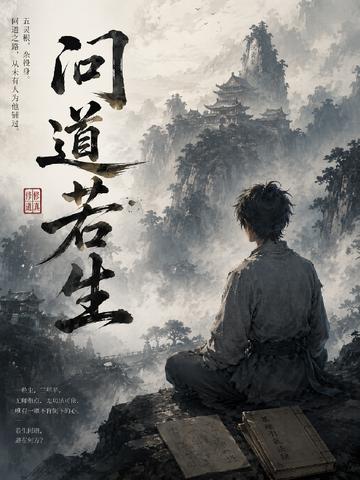
On the night when Liuhe Village was destroyed, Liu Gen hid in a haystack and became the only survivor in the village.
The mountain patrol monk told him: You have spiritual roots. Although it is not good, at least you have a way to survive in the sect.
So, he changed his name to Ruosheng.
The five spiritual roots are inferior, with no teacher and no family background. While others used Qi in a few days, he used it for ten years; while others competed for elixirs and magic weapons, he carried water and chopped firewood in the kitchen, and exchanged his life for spiritual stones in the mine. It took twenty years for him to reluctantly step through the outer door.
But at this time, the spiritual energy of heaven and earth is declining. The mineral veins are depleted, the production of spiritual fields is reduced, and the price of medicinal materials is rising. The sect also begins to reallocate tasks, qualifications and resources. For a low-level monk, an old sword, an injury test, and a job quota may all determine whether he can continue to practice.
Ruosheng has no extraordinary talent, nor does he have any miracles hidden within his body. All he could rely on was labor, observation, and a stack of old papers that had been revised repeatedly.
Deep into the Batu Caves, the fluorescent stone suddenly went out next to an unmarked shaft, and the five elements in his body also briefly paused. Ruosheng gradually understood: The real danger is not just not being able to see the answer, but that people always mistake their guesses for facts they have already seen.
He wanted to live, and he also wanted to one day return to the village name that was included in the old files and find out what happened that night.
This is the story of a monk with mediocre qualifications who continues to move forward after making mistakes, seeking confirmation and paying the price again and again.