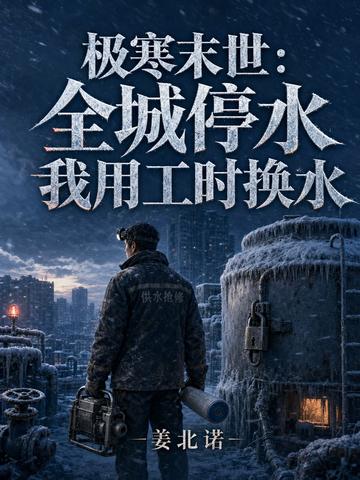
The weather station was still reporting minus 8 degrees Celsius, and the water in the sampling cup had frozen first. Zhou Li, a water plant operator, knew that the water intake would freeze to death within six to ten hours. No one was willing to sign for "possible disaster", so he could only drag back the old filter membrane, chemicals and hand pump according to the waste process, and rush back to Building No. 7 In Hepingli.
The daughter was still in the building, and the wife went to Linzhou. In the end, she only sent two words: "We've arrived." On the first night when the water was cut off, Zhou Li did not distribute all the water for free. He only set a rule: for two hours of work, 20 liters of water will be exchanged. But there are 4.31 Tons of water on the roof, but the basement cannot be opened; there is water in the heating pipe, and you may collapse if you take a sip; and the fuel with unclear label may poison a whole house of people when burned.
If Zhou Li wants his daughter and Building No. 7 To survive the extreme cold first, he must record every bucket of water, every fire, and every rescue as verifiable work hours, sources, and responsibilities. He soon discovered that the real difficulty was not to find resources, but to get everyone to accept the rules: the right decision would save some people, but also make others wait, owe money, or even be shut out. When he admitted that he had known about the risk of snow water contamination for a long time, Zhao Min only said: "It's too late."
There are no supplies that appear out of thin air, and there is no savior who makes decisions for everyone. There is only an old building that is about to run out of water and heat, a water plant worker who makes mistakes, and a way to survive that must be exchanged for labor, resources and trust.