This is not a feel-good story, so please be patient and read it carefully.
I believe it will offer you plenty to reflect on, whether you are taking in the scenery or navigating life at court or beyond it.
He was Bai Qi, the God of War, undefeated in a hundred battles. Yet he was also a man who knew how to wait, a man who could read the many kinds of scenery around him and cherish them.
He waited for the supply route to be cut, for the Zhao army to go hungry, for Zhao Kuo to make a mistake. For forty-six days, he crouched on the edge of the valley at Changping, waiting as four hundred thousand Zhao soldiers went from having provisions to running out, from an organized force to a rout, from living men to prisoners of war. After forty-six days, he stood up and made that decision. Then, for the rest of his life, he waited for its repercussions, waiting as they slowly grew cold, turned to ash, and faded within his bones, until at last they no longer needed to be remembered.
What moves you is not the hard-nosed analysis of warfare, the flag signals, the strategy tables, or the calculations of supply routes. It is the days he spent alone in his quarters after all the battles were over. He sat in his quarters in Xianyang for an entire winter, watching the pomegranate tree in the courtyard shed every leaf, waiting for the court to decide his fate. He sat there without writing letters, asking favors, or offering explanations. When Fan Ju pressured him at court, he did not resist. When the King of Qin stripped him of his military command, he did not argue. When he was demoted to the ranks, he did not cry injustice. When he went to Yinmi, then Duyou, and took the short sword, he had no more words to spare. He had known all along that these things would come. He simply waited for them.
Waiting like that is harder than fighting a war.
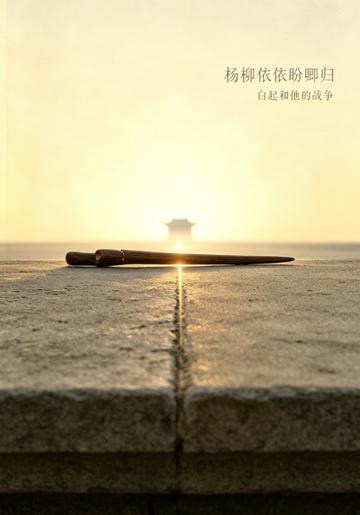

The God of War experienced such hardship