My new novel is here! You’re welcome to read it on Tomato Novel. I hope you’ll enjoy it. Your support inspires me to write, and I’ll do my best to tell every story well!
Reader comments 2
When the system is just a stethoscope
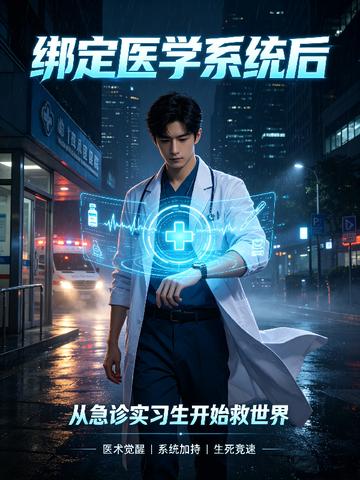
Medical system articles can easily be written in two ways: either a cheating and entertaining article, or a suspended love story. But "This Doctor is Not Simple" takes the third path - it makes the system a supporting role and the doctor the protagonist.
The story begins when Chen Mo binds the "medical system" during the night shift. The system gives him skills such as accurate diagnosis and rapid puncture, which can be used only three times a day. It sounds like cheating, but the author quickly draws a line with one thing: the system's probability of diagnosing Lao Zhou as hyperkalemia is 82%, and the remaining 18% is other possibilities. Chen Mo himself confirmed the diagnosis chain before prescribing the medicine. Later, when I encountered a difficult case with a fever for two months, the system reliability was only 38%, and it was all up to Chen Mo himself to push the bone marrow puncture step by step. The system's sense of existence becomes lower as the years go by, and Chen Mo's judgment as a doctor becomes more solid as the years go by.
Another plus is the real workplace gaming. Chen Mo has stayed in the hospital for eight years and is familiar with everyone in the department. When searching for drugs, he looked for old classmates in the pharmacy department, kept the names of witnesses when obtaining evidence, and carefully considered every word when handing out the receipt form at the department's regular meeting - these details were not given by the system, but were honed by eight years of living in the county hospital. The villain Li Jianguo's final downfall was not revealed by the system with one click, but was a chain created by Chen Mo using warehouse entry and exit records, nurses' testimonies, and system operation logs. This kind of "down-to-earth investigation" is much more readable than "systematic investigation".
The environment of the county hospital also supports the skeleton of the story. Patients with "fever pending investigation" transferred from township health centers, patients with fractures who fell on the construction site, and chainsaw injuries that cut off fingers - these cases all have a unique texture to the county. During the emergency rush hour, more than a dozen cars rushed in at the same time. Chen Mo continued to deal with it for more than an hour until his hands shook. As he read, he could feel that the person outside the screen was really tired.
As for shortcomings, the system's later effects are indeed weak, and some readers may feel that the "feeling of cheating" is not enough. But looking at it from another perspective, this is exactly the value of the story - no matter how easy the system is to use, the person who really saves people in the end is the attending physician who has worked in the hospital for eight years. A doctor who doesn't panic or stop, who knows when to trust the system and when to trust himself.
At the end of the story, Chen Mo was still sitting in that office, with the old locust tree outside the window and endless medical records in front of him. The system is still there, but it is no longer the most important thing.
Wow, wow, it's so real, even people in the industry are shocked! Top top top top top top


When the system is just a stethoscope Medical system articles can easily be written in two ways: either a cheating and entertaining article, or a suspended love story. But "This Doctor is Not Simple" takes the third path - it makes the system a supporting role and the doctor the protagonist. The story begins when Chen Mo binds the "medical system" during the night shift. The system gives him skills such as accurate diagnosis and rapid puncture, which can be used only three times a day. It sounds like cheating, but the author quickly draws a line with one thing: the system's probability of diagnosing Lao Zhou as hyperkalemia is 82%, and the remaining 18% is other possibilities. Chen Mo himself confirmed the diagnosis chain before prescribing the medicine. Later, when I encountered a difficult case with a fever for two months, the system reliability was only 38%, and it was all up to Chen Mo himself to push the bone marrow puncture step by step. The system's sense of existence becomes lower as the years go by, and Chen Mo's judgment as a doctor becomes more solid as the years go by. Another plus is the real workplace gaming. Chen Mo has stayed in the hospital for eight years and is familiar with everyone in the department. When searching for drugs, he looked for old classmates in the pharmacy department, kept the names of witnesses when obtaining evidence, and carefully considered every word when handing out the receipt form at the department's regular meeting - these details were not given by the system, but were honed by eight years of living in the county hospital. The villain Li Jianguo's final downfall was not revealed by the system with one click, but was a chain created by Chen Mo using warehouse entry and exit records, nurses' testimonies, and system operation logs. This kind of "down-to-earth investigation" is much more readable than "systematic investigation". The environment of the county hospital also supports the skeleton of the story. Patients with "fever pending investigation" transferred from township health centers, patients with fractures who fell on the construction site, and chainsaw injuries that cut off fingers - these cases all have a unique texture to the county. During the emergency rush hour, more than a dozen cars rushed in at the same time. Chen Mo continued to deal with it for more than an hour until his hands shook. As he read, he could feel that the person outside the screen was really tired. As for shortcomings, the system's later effects are indeed weak, and some readers may feel that the "feeling of cheating" is not enough. But looking at it from another perspective, this is exactly the value of the story - no matter how easy the system is to use, the person who really saves people in the end is the attending physician who has worked in the hospital for eight years. A doctor who doesn't panic or stop, who knows when to trust the system and when to trust himself. At the end of the story, Chen Mo was still sitting in that office, with the old locust tree outside the window and endless medical records in front of him. The system is still there, but it is no longer the most important thing.
Wow, wow, it's so real, even people in the industry are shocked! Top top top top top top