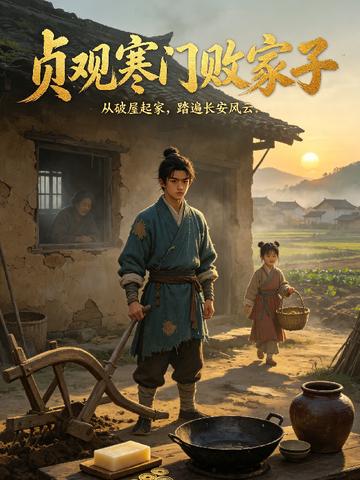
Cheng Rui, a modern-day corporate drone, woke up to find he had transmigrated to the Tang Dynasty in the third year of the Zhenguan era. He had become a poor young man in Yunyang County, Jingzhao Prefecture, who shared his name. From the start, he was in hell mode: his father had died young, his mother was bedridden, and his predecessor had sold off every bit of the family's farmland and run up a ten-string debt to the local gentryman, Zhao Decai. All they had left was a leaky mud-brick hut and his seven-year-old younger sister, Cheng Xiaoyu, who was pale and painfully thin. The neighbors saw him as a hopeless wastrel, and the creditor was sharpening his knives, waiting for the deadline to arrive so he could seize their home and possessions, even taking his sister as payment.
Faced with this desperate situation, Cheng Rui had no time to lament. He knew that transmigrating was the greatest golden finger of all: the engineering knowledge, business sense, and historical perspective in his mind were far ahead of their time, and they were his only chance to turn things around. In the eyes of others, the newly awakened “Cheng Rui” still did nothing useful: he tinkered with wood and iron to improve farm tools, collected cheap animal bones and fat to make “soap,” and boiled down rotten fruit to refine “rock sugar.” Everyone laughed at his madness, saying he had found a whole new way to squander the family fortune.
But miracles soon began to happen. The improved curved-plow made the family's last vegetable plot far more productive. “Cheng's Fragrant Soap,” with its fresh scent, caught the eye of a passing traveling merchant and sold for a high price. The clear, sparkling “rock sugar” opened doors to the wealthy merchants of the county seat. With his first earnings, Cheng Rui paid part of the interest and kept the creditor at bay. The real profits also gradually won him the trust of some honest neighbors. He organized the villagers into a “mutual aid cooperative,” coordinating the purchase of raw materials, dividing up the work, and selling the goods together. They expanded from soap and rock sugar to simple furniture and improved farm tools, building, right there in the countryside of Yunyang County, the beginnings of an artisanal