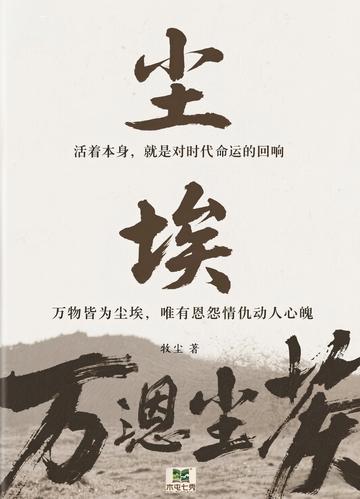
[Era + Countryside + Little People + Desperate Survival + Life and Death Love + Depravity of Human Nature + Family Epic + Historical Changes] Living itself is an echo of the times and destiny. All things are dust, only love, resentment and hatred touch the soul.
There was a severe drought that year and Wu Tianliang was just born. His father went to fetch water and was beaten to death on the spot due to a dispute. Wu Tianliang and his mother depended on each other until he was twelve years old, when his mother starved to death. In order to survive, Wu Tianliang went to Gushan County alone. He fainted from hunger at the door of Shopkeeper Liu's small restaurant. He was discovered by Shopkeeper Liu's daughter Xiangmei and rescued him.
Xiangmei asked her father to take Wu Tianliang in and settled in a small restaurant. Shopkeeper Liu's daughter-in-law, Feng Yuzhen, betrayed her marriage and snitched on her husband for being a radical. Her husband was arrested and imprisoned. Shopkeeper Liu's wife had been committing adultery with the Fifth Master for a long time, and was plotted against by the Fifth Master. The family's oil mill fell into the hands of the Fifth Master. His wife was so ashamed and angry that she jumped into the river and committed suicide. Shopkeeper Liu was devastated and knew that his days were numbered, so he entrusted Xiangmei to Wu Tianliang.
Before his death, Shopkeeper Liu revealed that he accidentally killed his neighbor when he was young. Only then did Wu Tianliang realize that he was the murderer of his father that he had been searching for for many years. Wu Tianliang married Xiangmei and had a daughter, Cui'er, the following year. Cui'er fell into the water and died at the age of six. Xiangmei missed her daughter too much and committed suicide by drowning in the river. Wu Tianliang was deeply hit, gave up on himself, hung out with a group of gamblers, and regarded shopkeeper Liu's grandson as a thorn in his side. Wu Tianliang and his gambling friends were set up and silenced by the bandit Boss Han. Only Wu Tianliang escaped by chance. He lived in Xiucheng County, opened a small restaurant, and met the crazy homeless girl Feng Yuzhen.
It turns out that Feng Yuzhen was defrauded of money and sex by her mistress. After being abandoned, she went crazy and went to Xiucheng County to look for her son Tian Fu. Wu Tianliang suddenly realized that he was determined to help Feng Yuzhen find his son Tian Fu. After learning about Tian Fu, Wu Tianliang closed the small restaurant and took Feng Yuzhen to find it. Tian Fu usually works out of town and has no one at home. At the end of the year, Tian Fu's wife returned home with her child, but Tian Fu accidentally fell down the stairs and died.
From the moment Feng Yuzhen betrayed her family and abandoned her husband and son, tragedy was already doomed. There was heavy snowfall that year, and Feng Yuzhen came to her son Tian Fu's grave late at night. When she was found the next day, she had frozen to death. A pile of white snow covered her sinful life.
This book takes the protagonist's life course of nearly a century as the axis and connects the long years from the early years of the Republic of China, the warlord war, the Anti-Japanese War, the War of Liberation to the reform and opening up. It embeds "little people" into "big history" and focuses on their ups and downs in the tide of the times. The narrative is grand and has a deep sense of history. It depicts the specific pain of life and the true power of the underlying narrative, as well as the magnificent picture of the times.
Reader comments
After reading "Dust", my heart felt like a big stone was weighing on me, but I couldn't help but applaud Wu Tianliang's "weed-like" tenacity! From an orphan to an enemy's son-in-law, to the fall and redemption after losing his beloved, Wu Tianliang's life is simply dancing on the tip of a knife. In front of the torrent of the times, we may be as small as dust, but living in itself is a great resistance. No matter how fate plays tricks on you, as long as the light in your heart is not extinguished, even if you are rolling in the mud, you can still live with your own dignity and heaviness.
"Dust" revolves around the fateful story of life and death in a family, where grudges and hatred entwine the fate of everyone. The writing is melancholy and thick, describing the struggles and ups and downs of ordinary people. All living beings are like dust, struggling to seek in the torrent of the times, and realize the power contained in living itself.
A stunning masterpiece of realism!
The age, country, betrayal, suffering, emotions of life and death, and the weight of history are all here!
However, the work does not praise suffering, but rises to a philosophical level. From the perspective of values, it examines the various characters in the article and allows readers to make their own judgments!
Everyone in the world is like dust, rising and falling with the wind, unable to control themselves. This book describes the life of the people at the bottom. There is no dramatic plot, only the real world. Inquiring about fate in the trivial daily life, the quiet words hit the heart directly and are full of realistic texture.
"Dust" depicts the ups and downs of ordinary people's lives. All living beings are like tiny specks of dust, struggling between fate and reality. The text is simple and restrained, describing the joys and sorrows of the world, allowing readers to see the helplessness and tenacity of ordinary life, and making people think about the meaning of individual existence.
"Dust" revolves around the fateful story of life and death in a family, where grudges and hatred entwine the fate of everyone. The writing is melancholy and thick, describing the struggles and ups and downs of ordinary people. All living beings are like dust, struggling to seek in the torrent of the times, and realize the power contained in living itself.
The rural family novels of the 1990s focus on the ups and downs of the little people at the bottom, and describe the fate of all living beings like dust in the midst of love, hate and suffering.
The world is like dust. This book uses the ups and downs of several generations of a family to describe the suffering and affection of ordinary people in this era.




After reading "Dust", my heart felt like a big stone was weighing on me, but I couldn't help but applaud Wu Tianliang's "weed-like" tenacity! From an orphan to an enemy's son-in-law, to the fall and redemption after losing his beloved, Wu Tianliang's life is simply dancing on the tip of a knife. In front of the torrent of the times, we may be as small as dust, but living in itself is a great resistance. No matter how fate plays tricks on you, as long as the light in your heart is not extinguished, even if you are rolling in the mud, you can still live with your own dignity and heaviness.
"Dust" revolves around the fateful story of life and death in a family, where grudges and hatred entwine the fate of everyone. The writing is melancholy and thick, describing the struggles and ups and downs of ordinary people. All living beings are like dust, struggling to seek in the torrent of the times, and realize the power contained in living itself.
A stunning masterpiece of realism! The age, country, betrayal, suffering, emotions of life and death, and the weight of history are all here! However, the work does not praise suffering, but rises to a philosophical level. From the perspective of values, it examines the various characters in the article and allows readers to make their own judgments!
Everyone in the world is like dust, rising and falling with the wind, unable to control themselves. This book describes the life of the people at the bottom. There is no dramatic plot, only the real world. Inquiring about fate in the trivial daily life, the quiet words hit the heart directly and are full of realistic texture.
"Dust" depicts the ups and downs of ordinary people's lives. All living beings are like tiny specks of dust, struggling between fate and reality. The text is simple and restrained, describing the joys and sorrows of the world, allowing readers to see the helplessness and tenacity of ordinary life, and making people think about the meaning of individual existence.
"Dust" revolves around the fateful story of life and death in a family, where grudges and hatred entwine the fate of everyone. The writing is melancholy and thick, describing the struggles and ups and downs of ordinary people. All living beings are like dust, struggling to seek in the torrent of the times, and realize the power contained in living itself.
The rural family novels of the 1990s focus on the ups and downs of the little people at the bottom, and describe the fate of all living beings like dust in the midst of love, hate and suffering.
The world is like dust. This book uses the ups and downs of several generations of a family to describe the suffering and affection of ordinary people in this era.