
Stats
120Chapters
Tags
Synopsis
Reader comments
In booklists 5



Has Anyone Written Their Own Novel? Let Me Be Healthy?
Is there any? Is there any? ( ̄∇ ̄)Give me a look!
2.6MViews298Books2dUpdated


Mutual Concern and Mutual Praise (Can Recommend Books)
Every pass must be returned, like once and twice
1.2MViews293Books1dUpdated


New book! New book! New book! New book recommendation post! All new books under 200,000 yuan can come in, regardless of subject type!
621.7kViews352Books10hUpdated

When New People Write Books, How About Mutual Review?
I want to read a book similar to "Dreams from Another World".
511.6kViews336Books1dUpdated

Help Post for New Writers
I want to watch content similar to "National Beast Control: Only I Can See the Hidden Route". Mutual aid for new writers
852Views13Books22dUpdated
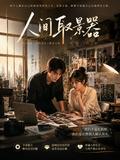
What impressed me most about this book was not the amazing photography skills, but Lin Shen's silence when he stood in the studio, facing the ledger and empty schedule. This is a book about craftsmen, but it spends a lot of space on business operations - quotations, final payments, delivery standards, and attribution of responsibilities. The author is very clear: majoring can only help you get admission tickets. What really determines how far you can go is your ability to deal with trivial matters, bear losses, and play games with others. Lin Shen does not have a golden finger. All he has is a pair of eyes that can see beauty and the patience to repeatedly adjust the lighting for a photo. But the reality is that principles cannot be paid for rent, and aesthetics cannot be exchanged for trust. When he lost time and time again due to quotations, speed, and communication errors, there was no sensationalism in the book, only plain descriptions - as if to say, the dignity of an adult is not to never fall, but to stand up after falling and continue to complete the next order. The title of the book "The Viewfinder of the World" is a pun: the camera's viewfinder requires framing, selection, and focus; the same is true in life. This book does not teach you how to win, it just quietly tells you that being able to lose is truly decent.
"The Viewfinder of the World": The most difficult dignity for adults is to admit that they will lose too At first, looking at the setting of "The Viewfinder of the World", it is easy to interpret it as an urban novel about "a photographer quits his job to start a business and relies on his professional skills to help others". Only after I actually read it did I realize that it was not about how a technical expert wins all the way, but about how a person who only believes in his work is forced by reality to learn how to manage, employ people, admit mistakes, and take responsibility. Lin Shen had no system and no information gap caused by rebirth. All he has is years of accumulated experience in photography and design, as well as almost stubborn professional principles. But the most real thing about this book is that principles will not automatically turn into orders, and professionals cannot pay rent, pay wages, or recover the balance for him. A shooting may be lost in quotation, a pitch may be lost in delivery speed, and a completed project may be lost in real money due to version, batch or communication errors. The book describes cured meats, catering, food factories, e-commerce details pages and live broadcast rooms. They seem to be completely different industries, but what really connects them is the same thing - how ordinary people can survive by relying on a craft. Taking good-looking photos is just the beginning. The more difficult thing is to judge what can and cannot be said, who has the right to confirm it, and who should be responsible if something goes wrong. I really like that the author didn't write Zhou Mingchuan as a low-level villain who can only do evil. He has a mature team, standard processes and stronger delivery capabilities, and he can indeed beat Lin Shen head-on. Lin Shen's persistence is valuable, but his slowness, control, and unwillingness to let go will also hurt the team. The opponent is not a joke specially made to set off the protagonist, but another way of survival that is equally valid. Shen Yu's emotional line is also very restrained. She is not a tool who provides resources to the male protagonist and wipes his butt, but an entrepreneur who has her own customers, contracts and operating pressures. The closeness between two people seldom relies on sudden sweets, but more often occurs in choices: whether to cross the customer's boundaries, whether to make decisions for the other party, and whether to retain respect when the other party makes mistakes. This kind of relationship develops slowly, but it has the weight that an adult relationship should have. This book is not without barriers to reading. The industry information in the early stage is denser, and the pace is slower than common urban cool articles. Some paragraphs are even like listening to a project review in person. But when the technical details truly become the livelihood of the client, the salary of the team, and the price the protagonist must pay, that knowledge ceases to be instruction manual and becomes part of the plot. The most touching thing about "The Viewfinder of the World" is not that Lin Shen proves that he is always right, but that he finally dares to say "I made a mistake this time" and is willing to pay, rework, and lose orders for this sentence. If you have experienced working overtime, taking the blame, changing customer demands, colleagues leaving, or have ever seriously thought about doing something on your own, there should be a moment in this book that makes you see yourself.
Nice. The camera is focused on the ordinary world, and the details of daily life are slowly unfolding, and all kinds of living things are reflected between the lines.