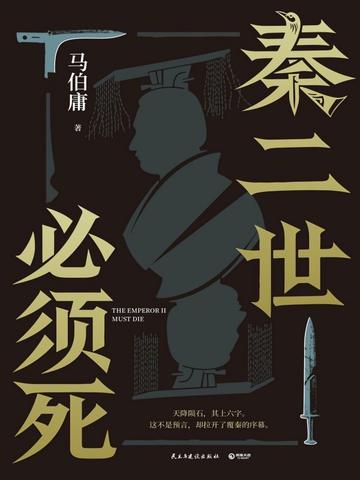
Ma Boyong's new 2026 long historical romance novel.
A meteorite fell from the sky with six characters on it. This was not a prophecy, but it was the prelude to the overthrow of Qin. Han, Zhao, Wei, Chu, Yan, Qi, Qin. Seven people from seven countries, with seven thoughts, fell into the same big whirlpool.
Some do it for ambition, some do it for revenge, some do it for morality, and some do it just to survive. Their goal is only one - Qin II must die.
Reader comments
Reading "Qin II Must Die", the author reconstructs the process while respecting the ending. In the group portrait strategy map from Zhang Cang's perspective, historical figures such as Xu Fu, Lao Ai, and Fu Su have been interestingly reset, which is both dramatic and interesting. The design of the protagonist group deliberately collecting stamps from the descendants of the Six Nations is also very ingenious. It is another level of fun for those who are familiar with history, and readers who are not familiar with it can also take the opportunity to understand the general direction. However, the pace is a little slow, and compared to the previous game, I personally feel that there are some changes in style.
My biggest feeling after reading "Qin II Must Die" is that the author reconstructed the process while respecting the ending. Some historical materials have large discrepancies, but the overall trend does not completely deviate from the historical trajectory. It is a historical novel with obvious artistic processing, rather than a historical lecture.
The novel takes Zhang Cang, the censor of the Qin Dynasty, as the protagonist, and constructs a group portrait strategy map. The fictional character relationships and settings not only subvert historical common sense, but also give the story more narrative space. The protagonist Zhang Cang is more like the author's spokesperson: he is a witness and comprehender of the collapse of the Qin Dynasty from the inside out, from root to leaf, and his wisdom and insight far exceed others. He loved health care and eventually lived to become the prime minister during the Liu Bang period. This setting is consistent with official history.
The character relationship design in the book clearly has the color of "a mash-up of historical figures", with the following interesting settings: Xu Fu became an old friend of Qin Shihuang, Lao Ai was reshaped into a Mohist giant, and Fu Su fell in love with Li He, the daughter of the famous Zhao general Li Mu, just to echo the allusion of "Fu Su in the mountains" in "The Book of Songs: Zheng Feng". Even the encounter between Yu Ji and Xiang Yu is included in the narrative, which seems to add a footnote to the first meeting of these famous tragic couples in history.
The protagonist group also has a deliberate philatelic color: it is deliberately assembled from the descendants of the Six Kingdoms: Xu Fu (Qi), Yishui (Yan), Xiang Tang (Chu), Zhang Cang (Wei), Zhang Liang (Han), Li He (Zhao). There is drama and interest, but this sense of patchwork also weakens the weight of history itself.
The feeling of procrastination is an obvious shortcoming of this book. The plot of assassinating Qin II repeatedly failed, and new people were repeatedly brought into the group in an attempt to create tension, but expectations were constantly lowered. In the end, it is still up to the protagonist to turn the tide and barely close the gap in history. After all, Qin II did die here, and the author must return to that fixed end point within the fictional framework.
The fog of history is too thick, and the truth has long been elusive. The author created this novel with ups and downs of plot only with subjective emotions. It can be used as a reference, but should not be taken as a historical fact. It is a fun read for those who are familiar with history; readers who are not familiar with the historical context can also use this to understand the general direction. However, compared with the previous work, the author's level seems to have declined, with more traces of commercialization and less original vigor.
It's beautiful, exciting, and has a sense of history. It's neither a joke nor a reenactment of historical facts. Not boring history!
Prince Ma's books are still wonderful
There is no doubt about the quality of Ma Wangye's books. They are good-looking and good-looking. The author's works are still far better than Tomato's first-rate casual writers.
The only shortcoming is the lack of rationality in several major twists. For example, in the first twist, the protagonist Zhang Cang gives up his official status and joins Xu City. As a basic official, his status is acceptable, and he has a mother and a family. How could he choose the Yi tribe without hesitation and join the rebels directly?
There are several similar places. Maybe this is also the chronic problem of excessive coincidence in Ma Wangye's books.
Very pretty! I have read most of Ma Boyong's books, and they are worth reading twice or three times. There is a delicacy in "The Eaters of the South" - wolfberry sauce, and it is also in this book. I seem to know the taste of wolfberry sauce [laughs]
There are many twists and turns, which are unexpected. It seems that you have entered an alley, and then a door appears on the wall. There is no end to the road. Every character in it is not just good or bad. Their human nature is complex, and everything they do has a reason. Sometimes destiny is really difficult to explain clearly.
Prince Ma's products are guaranteed [laughs]
Prince Ma's book can't be put down once you pick it up.
Ma Boyong's ingenious ideas are intertwined and fascinating, and his anti-Qin designs are like a pile of dominoes.
The plot has ups and downs, and the historical details are basically correct.
The beginning of the book is compact and interesting, but it starts to drag a bit in the middle and late stages.
But in the end, I did learn something. Many historical terms and characters were constantly searched and understood.
Good knowledge, books that need to be read while using beanbags, Women Convicted, Wen Wuhai, Sui Houzhu, haha
Slightly inferior to "Chang'an's Lychees" and "The Disciple Who Eats the South"
It feels like it lacks a little aura and is a bit sloppy.
But it's still pretty good
The transformation of each character is shocking
The prince lives up to his reputation, the plot is full of twists and turns, and suspense rises one after another. The only thing that is unreasonable is that Gongsun Chen grows up too fast.
I continue to watch.
The plot of the story is ups and downs, interlocking, and I have endless admiration for the characters' insights. I like Zhang Liang, Zhang Cang, and Xu Fu's insights on the current situation: skills, momentum, and Tao, and their ability to use them freely.
It's very interesting, and the imagination is really big. The disadvantage is that it is not enough to see.
Lord Ma is a master of telling stories, and his stories in Tomato are among the best. Compared to the author's other works, this story is a bit rushed and sloppy.
The work of a famous artist is indeed wonderful, with progressive layers and constant reversals!
OK. After all, he is talented.
The plot is compact and the content is rich.
It's so exciting and fascinating.
I hope the author can publish biographies of Yi Shui and Zhang Cang in the future. I really love this book [laughs]
The author's skills are still profound, but Lao Deng's background is
The plot is so intricate and the story has so many ups and downs that I can't help but get involved in it and experience life and death with the characters in the book. Great Lord Ma! [Like][Like][Like]
After reading this book, I feel that Lao Ma has made much progress than before. From the writing style, it is much better than "Chang'an's Lychees". The selection of materials is still so novel, which is really great.
Reading "Qin II Must Die", the author reconstructs the process while respecting the ending. In the group portrait strategy map from Zhang Cang's perspective, historical figures such as Xu Fu, Lao Ai, and Fu Su have been interestingly reset, which is both dramatic and interesting. The design of the protagonist group deliberately collecting stamps from the descendants of the Six Nations is also very ingenious. It is another level of fun for those who are familiar with history, and readers who are not familiar with it can also take the opportunity to understand the general direction. However, the pace is a little slow, and compared to the previous game, I personally feel that there are some changes in style. My biggest feeling after reading "Qin II Must Die" is that the author reconstructed the process while respecting the ending. Some historical materials have large discrepancies, but the overall trend does not completely deviate from the historical trajectory. It is a historical novel with obvious artistic processing, rather than a historical lecture. The novel takes Zhang Cang, the censor of the Qin Dynasty, as the protagonist, and constructs a group portrait strategy map. The fictional character relationships and settings not only subvert historical common sense, but also give the story more narrative space. The protagonist Zhang Cang is more like the author's spokesperson: he is a witness and comprehender of the collapse of the Qin Dynasty from the inside out, from root to leaf, and his wisdom and insight far exceed others. He loved health care and eventually lived to become the prime minister during the Liu Bang period. This setting is consistent with official history. The character relationship design in the book clearly has the color of "a mash-up of historical figures", with the following interesting settings: Xu Fu became an old friend of Qin Shihuang, Lao Ai was reshaped into a Mohist giant, and Fu Su fell in love with Li He, the daughter of the famous Zhao general Li Mu, just to echo the allusion of "Fu Su in the mountains" in "The Book of Songs: Zheng Feng". Even the encounter between Yu Ji and Xiang Yu is included in the narrative, which seems to add a footnote to the first meeting of these famous tragic couples in history. The protagonist group also has a deliberate philatelic color: it is deliberately assembled from the descendants of the Six Kingdoms: Xu Fu (Qi), Yishui (Yan), Xiang Tang (Chu), Zhang Cang (Wei), Zhang Liang (Han), Li He (Zhao). There is drama and interest, but this sense of patchwork also weakens the weight of history itself. The feeling of procrastination is an obvious shortcoming of this book. The plot of assassinating Qin II repeatedly failed, and new people were repeatedly brought into the group in an attempt to create tension, but expectations were constantly lowered. In the end, it is still up to the protagonist to turn the tide and barely close the gap in history. After all, Qin II did die here, and the author must return to that fixed end point within the fictional framework. The fog of history is too thick, and the truth has long been elusive. The author created this novel with ups and downs of plot only with subjective emotions. It can be used as a reference, but should not be taken as a historical fact. It is a fun read for those who are familiar with history; readers who are not familiar with the historical context can also use this to understand the general direction. However, compared with the previous work, the author's level seems to have declined, with more traces of commercialization and less original vigor.
It's beautiful, exciting, and has a sense of history. It's neither a joke nor a reenactment of historical facts. Not boring history!
Prince Ma's books are still wonderful
There is no doubt about the quality of Ma Wangye's books. They are good-looking and good-looking. The author's works are still far better than Tomato's first-rate casual writers. The only shortcoming is the lack of rationality in several major twists. For example, in the first twist, the protagonist Zhang Cang gives up his official status and joins Xu City. As a basic official, his status is acceptable, and he has a mother and a family. How could he choose the Yi tribe without hesitation and join the rebels directly? There are several similar places. Maybe this is also the chronic problem of excessive coincidence in Ma Wangye's books.
Very pretty! I have read most of Ma Boyong's books, and they are worth reading twice or three times. There is a delicacy in "The Eaters of the South" - wolfberry sauce, and it is also in this book. I seem to know the taste of wolfberry sauce [laughs]
There are many twists and turns, which are unexpected. It seems that you have entered an alley, and then a door appears on the wall. There is no end to the road. Every character in it is not just good or bad. Their human nature is complex, and everything they do has a reason. Sometimes destiny is really difficult to explain clearly.
Prince Ma's products are guaranteed [laughs]
Prince Ma's book can't be put down once you pick it up.
Ma Boyong's ingenious ideas are intertwined and fascinating, and his anti-Qin designs are like a pile of dominoes.
The plot has ups and downs, and the historical details are basically correct.
The beginning of the book is compact and interesting, but it starts to drag a bit in the middle and late stages. But in the end, I did learn something. Many historical terms and characters were constantly searched and understood.
Good knowledge, books that need to be read while using beanbags, Women Convicted, Wen Wuhai, Sui Houzhu, haha
Slightly inferior to "Chang'an's Lychees" and "The Disciple Who Eats the South" It feels like it lacks a little aura and is a bit sloppy. But it's still pretty good The transformation of each character is shocking
The prince lives up to his reputation, the plot is full of twists and turns, and suspense rises one after another. The only thing that is unreasonable is that Gongsun Chen grows up too fast. I continue to watch.
The plot of the story is ups and downs, interlocking, and I have endless admiration for the characters' insights. I like Zhang Liang, Zhang Cang, and Xu Fu's insights on the current situation: skills, momentum, and Tao, and their ability to use them freely.
It's very interesting, and the imagination is really big. The disadvantage is that it is not enough to see.
Lord Ma is a master of telling stories, and his stories in Tomato are among the best. Compared to the author's other works, this story is a bit rushed and sloppy.
The work of a famous artist is indeed wonderful, with progressive layers and constant reversals!
OK. After all, he is talented.
The plot is compact and the content is rich.
It's so exciting and fascinating.
I hope the author can publish biographies of Yi Shui and Zhang Cang in the future. I really love this book [laughs]
The author's skills are still profound, but Lao Deng's background is
The plot is so intricate and the story has so many ups and downs that I can't help but get involved in it and experience life and death with the characters in the book. Great Lord Ma! [Like][Like][Like]
After reading this book, I feel that Lao Ma has made much progress than before. From the writing style, it is much better than "Chang'an's Lychees". The selection of materials is still so novel, which is really great.
Prince Ma must have perfect scores
I just can't stop
Worth a look. Look again. Watch again and again.
Looking good as always
Loyal readers of Teacher Ma[Like][Like][Like]