On a snowy night in southern Jiangxi in 1971, Zhao Lanqin went into labor on her way home from the night shift at a brick and tile factory. Her daughter was born in the snow beside a tractor.
Because she was a girl, she had no name growing up. Everyone in the family just called her “the second one.”
Her eldest sister, Qiuju, shouldered the burden of the family for her, leaving school to work at the factory so she could study;
Her father, Zhang Shoufu, never held her in his arms, but silently sat beside her when she failed an exam;
Her mother, Zhao Lanqin, wept by the stove, saving the last of her breast milk for her.
Her name was Zhang Qiuli: “Qiu” for autumn, and “Li” for smooth sailing.
The name came from Zhou Ping, a Shanghai-educated youth, who left her four words on the title page of Three Hundred Tang Poems: “Live well.”
It took her half a lifetime to learn how to live well.
This is a story about favoring boys over girls, about sisters, and about a father’s and mother’s love.
There are no golden fingers, no comeback and face-slapping, only an ordinary woman who blooms amid hardship.
If you too have ever been overlooked at home, if you too have ever been called “the second one,” this story is for you.
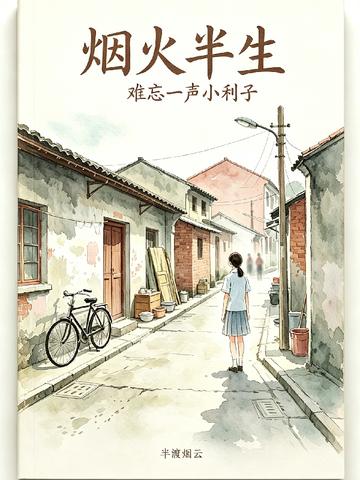


The rhythm is slow, and the excitement is a little less exciting for readers who are used to "three chapters and a twist", but on the other hand, it is the kind of book that is very friendly to the heart - book shortage, irritability, being overwhelmed by work during the day, lying down to read a few chapters at night, it is like drinking a bowl of lukewarm millet porridge. If you like the rich historical texture of "Human World", or prefer the joys and sorrows of the ordinary people in "Fireworks", then this work is worth reading. It is not just a novel, but also a spiritual journey about growth. Away from the hustle and bustle, calm down and listen to the sound of "little profit", which may awaken the softest memories in your heart.
It is neither an inspirational story nor a sad drama. It is a story about "living but no one sees". A woman's life is broken down into several items: a candy wrapper, a schoolbag, a book, and an empty phone number. She used these things to remember everyone who had given her a little warmth, but those people were gone. She lived like her mother before - alone, in the dark, with no one around her.