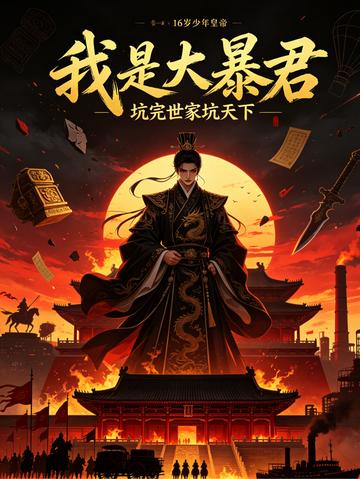
Ying Yi transmigrates into the fictional historical kingdom of Great Qian, a place much like the Spring and Autumn and Warring States periods. The emperor has just died, the country is in turmoil, and the court is rife with corrupt factions and domineering ministers. Ying Yi has just arrived in the body of the utterly useless sixteen-year-old Tenth Prince. After spending a day learning about his situation, he plans to live out his life in comfort as an idle prince or wealthy gentleman. But after factional infighting kills many of the princes, the court ministers finally reach a compromise: they plan to install Ying Yi, the most useless prince, as a puppet emperor. Ying Yi doesn’t want the job. Being emperor is like working a 996 schedule: do it well and you’re an overworked wage slave; do it badly and you’re everyone’s punching bag. He figures he’ll end up as the latter. He’d much rather be the lie-flat, laid-back prince he was before. But the royal family is now weak, and he has no choice but to take the throne. Still, he has one defining trait: if he doesn’t do something, he won’t do it at all, but once he starts, he does it properly. And being pushed around isn’t in his nature. Using open political maneuvers to divide the court ministers and turning their strength against them, he combines schemes both overt and covert to carve out a narrow ‘crack’ in which he can survive at court.


This dialogue is written just like an AI human-machine. There is no human touch at all. It seems to you that you might as well go watch an AI short drama.