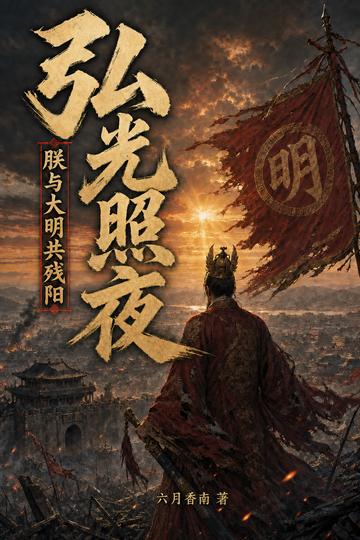
On June 19, 1644, the night Zhu Yousong ascended the throne, a soul from later generations woke up in the body of Emperor Hongguang.
He knew that the Qing army was about to move south, and that Yangzhou and Nanjing would fall one after another within a year. But he had no personal troops, no prestige, and no enough military pay. The civil servants and warlords around him still regarded the new emperor as a puppet that could be manipulated.
His golden finger is not a system, nor a prophecy that can recite all history, but a modern man's hazy understanding of organization, information and responsibility.
Faced with the mutual hatred of the old officials of Donglin, the supporting heroes, the four towns in Jiangbei, the refugee army and the maritime business group, Zhu Yousong put forward an almost risky condition: Give me a hundred days to see if the food can be distributed, the soldiers can be counted, and the orders can be truly implemented.
The war leader urged him to send troops, the peace leader urged him to bow his head, the advocating officer asked him to liquidate the old party, and the military leader asked him to honor his old debt. Everyone asked the emperor to prove that he belonged to this side.
But there is only one thing Zhu Yousong wants to do: reorganize a group of people who only compete for the court into a country that can still fight wars, feed the people, and be willing to take responsibility for decisions.
As the Qing army approaches the south of the Yangtze River, can the Hongguang Dynasty, which is destined to fail, light up the true lights of Nanming before the countdown to national subjugation ends?