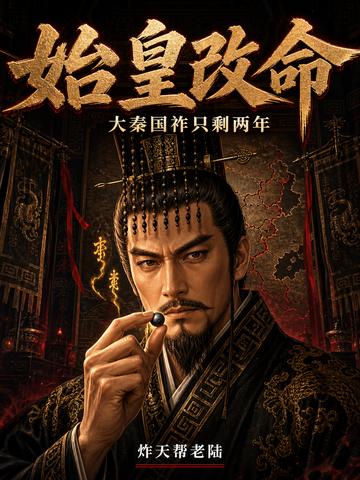
In the thirty-sixth year of the First Emperor's reign, when the pill was about to enter the mouth, two lines of small seal characters suddenly appeared in front of Ying Zheng's eyes -
Emperor's longevity: October.
Zuo of Great Qin: the second year.
Rejecting the elixir can save his life, but it cannot save Da Qin, which will perish in two years. What's even more frightening is that from then on, whenever he really prepares to issue a complete edict, the two life spans will change accordingly.
Execute all the people around the stone, and the country surrenders; stop the corvee, and the Qin Dynasty still perishes; sometimes two individually harmful decrees, combined in different orders, can continue the life of the Qin Dynasty.
The odd number only shows the consequences, not the answer, nor the distinction between loyalty and treachery. There were no visitors from later generations to offer advice, no gods to clean up the court for him. Ying Zheng could only use Qin people's eyes and Qin people's laws to check people, check books, and try strategies again and again, and personally drag out the dead Qin Dynasty before his life expired.
In this life, can Shaqiu's edict still kill the ancestral dragon?
Reader comments
It's quite novel. It just doesn't make sense that you know your life expectancy and don't take care of your posthumous affairs first. Write a few more imperial edicts to see who has the longest national fortune.
It's quite novel. It just doesn't make sense that you know your life expectancy and don't take care of your posthumous affairs first. Write a few more imperial edicts to see who has the longest national fortune.