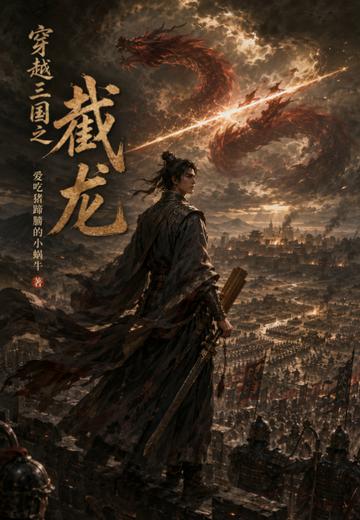
After transmigrating to the late Han dynasty, Zhao Heng had only three things:
A head full of the official history of the Three Kingdoms, a Destiny-Seizing System, and a life that could be lost at any moment.
He was a scion of a fallen clan, with three dilapidated rooms, twenty mu of poor farmland, and an old servant with bad knees and a bad back. The Yellow Turban Rebellion would begin in three months. First, he had to survive.
Fortunately, he knew everything: who would rise amid the chaos, who seemed loyal but was secretly rebellious, who was fated to die a miserable death, and who history had forgotten. He knew the official and unofficial histories by heart. That was his only trump card.
Zhao Yun was still an unknown warrior in Zhending? Seize him.
Zhang Liao was still a young man in Mayi, Yanmen? Seize him.
Tian Feng was forthright and outspoken, destined to die at Yuan Shao's hands? Seize him.
Shen Pei was loyal and would defend the city, only to see it fall? Seize him.
Other transmigrators showed off by plagiarizing poems. Zhao Heng relied on his wits, his understanding of people, and schemes he risked his life to carry out at every turn. He didn't rely on an aura of kingly authority. He relied on a bowl of porridge, a letter, and the words, “Do you trust me?”
Destiny said Zhao Yun belonged with Liu Bei, Zhang Liao with Cao Cao, Tian Feng had to die, and Shen Pei had to lose.
Zhao Heng said, “I'll seize them anyway.”
But seizing destiny came at a price, and changing history brought a backlash. The farther he went, the more enemies he made, the narrower his path became, and the greater the cost. To the north, the Black Mountain Army watched hungrily. To the south, the provincial governor plotted to depose the ruler. Above him, the commandery administrator smiled while hiding a knife.
Cao Cao said, “The only heroes under heaven are you, my lord, and me.”
Zhao Heng said, “I don't seize heroes. I seize destiny.”
He would not become emperor, usurp the throne, or repeat the old cycle of history.
Amid the mountains of corpses and seas of blood at the end of the Han dynasty, he would carve out a new path.