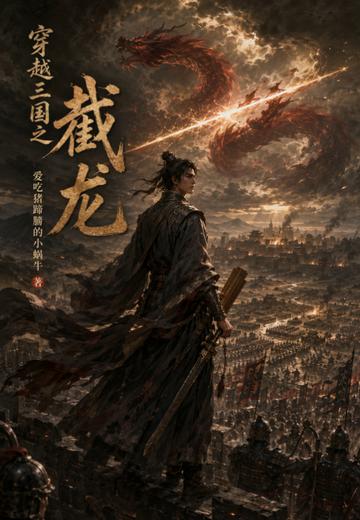
Traveling through the late Han Dynasty, Zhao Heng only had three things:
A brain with the official history of the Three Kingdoms, a destiny interception system, and a life that could be lost at any time.
A descendant of a declining gentry, with three shabby houses, twenty acres of thin farmland, and an old servant with a weak waist and legs. The Yellow Turbans had three months to go before the uprising, so he had to survive first.
Fortunately, he knows everything - who will rise in troubled times, who appears to be loyal but is actually rebellious, who is doomed to die tragically, and who is buried in history. He is familiar with both official and unofficial history, and this is his only trump card.
Is Zhao Yun still working as an unknown warrior in Zhending? Cut off.
Zhang Liao is still a Mayi boy in Yanmen? Cut off.
Is Tian Feng destined to die at the hands of Yuan Shao if he dares to remonstrate? Cut off.
Will Shenpei's loyal defense of the city eventually be breached? Cut off.
Others rely on copying poems to show off when they travel through time, but Zhao Heng relies on his brains, his heart, and his plans that cost his life every step of the way. It doesn't rely on the arrogance of a king, but relies on a bowl of porridge, a letter, and the sentence "Do you believe me or not?"
The destiny said that Zhao Yun should return to Liu Bei, Zhang Liao should return to Cao Cao, Tian Feng should die, and Shen Pei should lose.
Zhao Heng said: I insist on intercepting it.
But there is a price for cutting one's destiny, and there are backlashes for changing history. The further he goes, the more enemies there are, the narrower the road, and the greater the cost. The Black Mountain Army in the north is watching with eager eyes, the governor in the south is plotting to depose Li, and the prefect above his head is smiling but hiding his sword.
Cao Cao said: "The only heroes in the world are your envoy and Cao Er."
Zhao Heng said: "If a hero does not stop himself, he will stop his destiny."
Not to be an emperor, not to usurp the throne, not to repeat the cycle of old history.
He wanted to cut a new path in the mountains of corpses and sea of blood in the late Han Dynasty.