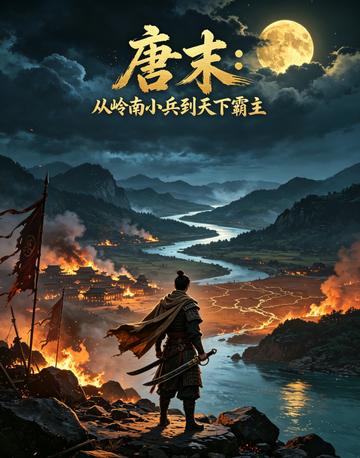
Late Tang Dynasty.
Lingnan soldiers.
Guard the passes, destroy the bandits' nests, occupy the southern frontier, and train strong troops.
Meng Jing, a farmer's son, started from a young age as an ordinary soldier on the bank of the Xijiang River and worked step by step.
Based on Wuling, he first leveled Fujian, then planned Jingxiang, drank from the Yangtze River and Huaihe River, and aspired to Chang'an.
Mountains and rivers are broken, and wars are everywhere.
Who said that in the wilderness, there can't be heroes who can determine the world?
(No system and golden fingers) (Not a rigorous historical article, pay attention to the party and be cautious)
Reader comments
I've read Chapter 52. Overall, it's not a big problem, but there are still a few bad points. The first is that the protagonist and his subordinates do not distinguish between occasions, and it is always A Jing. A Jing has no seriousness in a place like the army. If everyone calls you by your nickname, then where does your authority come from? Even if you are very fierce and your reputation is spread all over the world, and people call you by your nickname every day, you will see how many people will be dissatisfied with you, and you will obviously give others the feeling that you are not good enough. The second one is to tell your subordinates everything, which is very abstract. You should instill in your subordinates every day that you are a cow if you have soldiers in your hands, you can protect yourself only if you have soldiers in your hands, and you can do whatever you want if you have soldiers in your hands. Instill this kind of thinking in your subordinates every day. When you start doing it, your subordinates will definitely not obey you. Even if they obey you, they will protect themselves and hold the soldiers in their own hands. They will bury a trap for themselves for no reason. There is no problem if you draw a big pie. You have to explain it so clearly to your subordinates. Are you afraid that you will live too long? Originally I wanted to give it two or three stars, but after thinking about it, no one has read this novel, and I felt like it was going to get cold, so forget it and give it a high star.
I've read Chapter 52. Overall, it's not a big problem, but there are still a few bad points. The first is that the protagonist and his subordinates do not distinguish between occasions, and it is always A Jing. A Jing has no seriousness in a place like the army. If everyone calls you by your nickname, then where does your authority come from? Even if you are very fierce and your reputation is spread all over the world, and people call you by your nickname every day, you will see how many people will be dissatisfied with you, and you will obviously give others the feeling that you are not good enough. The second one is to tell your subordinates everything, which is very abstract. You should instill in your subordinates every day that you are a cow if you have soldiers in your hands, you can protect yourself only if you have soldiers in your hands, and you can do whatever you want if you have soldiers in your hands. Instill this kind of thinking in your subordinates every day. When you start doing it, your subordinates will definitely not obey you. Even if they obey you, they will protect themselves and hold the soldiers in their own hands. They will bury a trap for themselves for no reason. There is no problem if you draw a big pie. You have to explain it so clearly to your subordinates. Are you afraid that you will live too long? Originally I wanted to give it two or three stars, but after thinking about it, no one has read this novel, and I felt like it was going to get cold, so forget it and give it a high star.