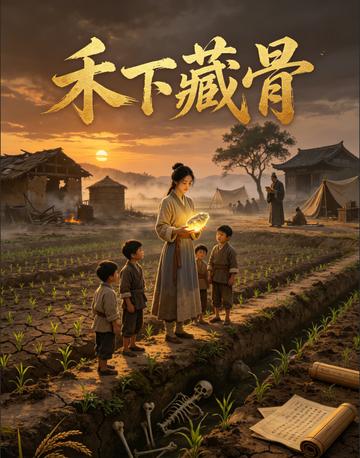
After a severe drought in Bianzhou, refugees spread all over the country. In order to resettle the victims, the imperial court issued wasteland reclamation orders and Baojia systems in parallel. Whoever could cultivate land, pay for grain, and keep a place safe would be able to stand firm in troubled times. Carrying a fragment of an ancient spiritual spring well that can identify vegetation and purify water for germination, the heroine takes her younger brother and a group of orphaned children to escape from the wilderness and settle down, farming, opening shops, and raising cubs in the deserted village to survive. However, nameless bodies were uncovered one after another in the wasteland, and cases of disappearances, abductions, and granary cases led to a black network of local powerful men embezzling food relief and manipulating the quota of children. The male protagonist appears to be a down-and-out schoolteacher, but in fact he is thoughtful and good at deciding cases. While he and the female protagonist are investigating cases and protecting the village, they are also helping a young man from a poor family to take the imperial examination, tearing a way out between his farmland and the case files.