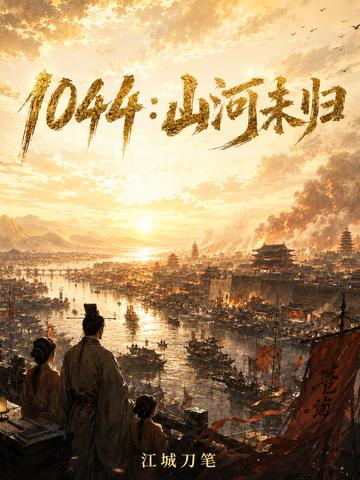
The Song Dynasty had the brightest lights and the deepest nights.
In 1004 AD, the Liao army of 200,000 troops went south. Xiongzhou border soldier Lu Shoubian withheld a piece of official money from the Jiehe private market that was not supposed to cross the river - there was a gap in the money.
He didn't expect that this coin would be in the arms of the Lu family for two hundred and seventy-five years.
The first generation, Lu Shoubian, witnessed the peace negotiation with one arrow in the city of Chanzhou. The peace was reduced to a price of 300,000 yuan per year. His family's Zhuozhou did not come back.
The second generation Lu Wenli thought that reading can change his life, but he saw that the article saved people and killed people.
The fourth generation Lu Huai Bian, in the winter of Jingkang, the bookshop was dismantled for firewood, and all he carried out of Bianliang was an old shoe and cloth bag.
The fifth generation Lu Nanzhou personally handed over the good news of Yancheng. When the twelve gold medals were heading south, his grain truck was halfway there.
Lu Yanjiang, the seventh generation, saw Jin's death with his own eyes. The whole country was in joy and he only wrote five words: Jin's death, I dare not rejoice.
The eighth generation Lu Guizhou retreated all the way from Xiangyang to Yashan. On the day the dynasty sank into the sea, he still carried the chipped copper coin and family letters that had been passed down for nine generations in his arms.
The one who survived was an eleven-year-old girl.
Chanyuan, Jingkang, Yue Fei's Northern Expedition, Yashan Naval Battle... Every decision made in the temple eventually became a burden for a family's rice price, repairs and escape.
They cannot change the world, but they can pass on people, words, objects and memories from generation to generation.
Before the mountains and rivers return, the people must survive first.
Dynasties can sink. The human heart cannot be surrendered.