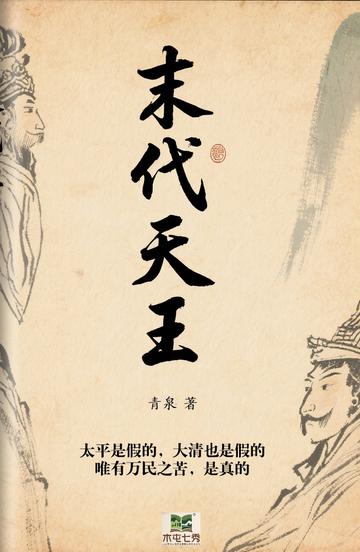
[Taiping Heavenly Kingdom + Reflection on History + Chronology + In-depth Narrative + Young Heavenly King] Taiping is fake, and so is the Qing Dynasty: only the suffering of all people is real.
In the third year of Xianfeng (1853), Hong Xiuquan captured Nanjing, renamed it Tianjing, established his capital here, proclaimed himself Heavenly King, and formally established the Taiping Heavenly Kingdom. At the same time, his five-year-old son Hong Tianguifu was appointed as the young master. He also issued a secret decree that the young master, who lives in the heavenly palace, will not be contaminated by the turbid air of the world, will not go out of the forbidden wall privately, will not interact with people in the world, and will not hear about the sufferings in the market.
In the third year of Tongzhi (1864), Hong Xiuquan died of illness, and 16-year-old Hong Tianguifu came to the throne as the Young Heavenly King. What he faced was a situation where the land was devastated and the mountains and rivers were broken. Soon, Tianjing City fell. After going through deep palace confinement, the collapse of faith, the death of his father and the collapse of the country, and the city being destroyed and massacred by soldiers, he finally saw clearly that the so-called heavenly father and brother, eternal destiny, heavenly soldiers protecting the city, and sharing peace were all absurd dreams that deceived himself and others.
Hong Tianguifu escaped from the city under the protection of the escort group led by Li Xiucheng, and has been hiding in the countryside incognito since then. Hong Tianguifu has seen the wars of the old dynasty and seen through the hypocrisy of the new dynasty. He is the only sober bystander in this ashes. In the face of unjust cases in court, he stood up for the people and exposed the private abuses of officials; when the government tightened the net and deliberately tamed the people's hearts, he put aside his obsession with identity and walked the countryside as a hermit, visiting farming and fishing households, recording the suffering of the grassroots over the years, and writing "The Sufferings of the People in the Prosperous Age".
He dismantled the underlying calculations of maintaining stability in the prosperous age word by word, and preserved the folk truths that were not accepted by official history books, but were still regarded as hidden dangers that shook the foundation of the prosperous age. In the end, the government burned most of the manuscripts, and he faced the disaster calmly. The old men who followed him in the past hid among the people and acted as secret guards, silently guarding the neighbors and protecting the manuscripts. The young girl Alian accompanied him, dispelling the loneliness and coldness of the long night with his warmth.
The story leaves a lasting revelation: What exactly is peace? Is it the glorious chapter in the golden age of history, or is it the silent purgatory of all people? This book uses Qingjiang County as a slice of time, tearing apart the mask of prosperity that the feudal dynasty had whitewashed for hundreds of years, and unfolding a heavy thinking about order, domestication, conscience and truth around Hong Tianguifu, the young leader of the Taiping Rebellion who escaped by chance and disappeared among the people.
Reader comments
Hong Xiuquan's son, Young Heavenly King, is a neglected figure in real history. The author goes against the grain and portrays him as a wise man who lives in seclusion in the countryside with his guardians to record the ills of the times.
This work is based on the turbulent modern background, and the portrait of the military camp in the opening chapter is very brilliant. The author accurately describes the details of weapons and military formations, and his cold brushstrokes set off the tense and depressing atmosphere of the war. The title of the book and volume imply the sense of fate of being trapped, and fully highlight the desolation of the end of the dynasty. It not only has a grand war pattern, but also conceals the struggles and dilemmas of the characters. It has a strong sense of historical atmosphere and is highly readable.
The opening chapter has a full sense of atmosphere, and the description of the Taiping Army formation is very graphic. Densely arranged soldiers, gleaming armor, and numerous weapons all create a majestic and chilling battlefield scene with just a few strokes. The thick historical background combined with the suspenseful title of "Dragon in the Heavenly Palace" lays the foreshadowing of the fate of being trapped. The text has a strong sense of atmosphere, making people eager to explore the ups and downs of the fate of the last king.
The narrative of the book has a strong tension of contrast: the first half describes Hong Tian Guifu's fifteen years of imprisonment in the palace. He was regarded as a child master at the age of five, isolated from the hardships of the market, wrapped in layers of words of "Heavenly Father and Heavenly Brother, Eternal Peace", and lived in a woven fantasy dream. When his father passed away and Tianjing fell, the cruel reality of the country's destruction and the city's destruction suddenly shattered his long-standing faith. The once aloof young master of the Kingdom of Heaven became a fugitive overnight. The huge gap reflects the involuntariness of individuals in the torrent of the times.
The core theme of the book is stated at the beginning: Taiping is fake, and so is the Qing Dynasty. Only the suffering of all people is real.
In the past, the Taiping Heavenly Kingdom boasted of shared peace, and the isolation of the deep palace prevented the young ruler from seeing the flames of war, exorbitant taxes, and refugees. The so-called ideal of heaven was just a self-paralysis dream of the upper class. After the fall of Tianjing, the Qing Dynasty boasted of a prosperous and stable era. However, local officials were corrupt, exploited the people, and injustices were common. The so-called prosperous era was just a glitz whitewashed in history books.
After Hong Tianguifu, the young leader of the Taiping Heavenly Kingdom, fled, he did not dwell on the past. Instead, he recorded the sufferings of the people and wrote "The Record of the People's Sufferings in the Prosperous Age". Feeling the vicissitudes of history, even if you are in a desperate situation and your faith has collapsed, as long as you have conscience and truth in your heart, ordinary lives can shine in the darkness and live their own "King of Heaven"!
A grand fantasy world view in troubled times. The last king is in a desperate situation where the country's destiny is exhausted and powerful enemies are around. Unwilling to lose the dynasty, he cultivates martial arts, gathers people's hearts and pacifies the four sides by himself. There are not only exciting fights of fantasy training, but also rich descriptions of the intrigues of the court and the common people of the family and country. "The Last Generation" is not the end, but the starting point of his struggle. It has a full sense of tragedy and three-dimensional character creation.
Peace is an illusion, and the Qing Dynasty is a delusion. Only the suffering of all peoples speaks loudly. The tide of the times surged, and the power of the princes collapsed. This book peels away the ostentatious shell of the dynasty and sees the precarious destiny of individuals under the great changes. The prosperous age has come to an end, old dreams have dissipated, and the weight of history has finally fallen on the shoulders of thousands of people.
An extremely rare subject, it takes Hong Xiuquan's son, Young Heavenly King, as the protagonist. After escaping from Tianjing, he became wise and lived in seclusion in a small village under the protection of Bu Qu. A series of stories unfold...
"The Last King" tells the story of the protagonist who breaks into the film and television industry and becomes a superstar based on his strength. The story restores the various aspects of the industry, combines passion and feelings of family and country, and describes the difficulty of sticking to the original intention. At the end, there is no successor to the king, which is evocative.
"The Last King" tells the short and tragic life of Hong Tianguifu and records the beginning and end of the fall of the Taiping Heavenly Kingdom. The author restores the picture of the troubled times, describes the tragedy of the young master's involuntary control, and reflects on the times through the rise and fall of the past. The rich text describes the desolation and helplessness of the end of the dynasty.
The story clearly divides two periods of life, forming a strong contrast. The first half unfolds the false peace in the deep palace of Tianjing: the strict palace walls isolate suffering, and the ideal of equality preached by the Kingdom of Heaven is just an empty doctrine in the eyes of the young master, and undercurrents have already been surging under the prosperous Tianwang Palace; the second half describes the folk years after the city was destroyed and fled. The anonymous Hong Tianguifu walked in the countryside, witnessing the exploitation of officials and the hunger of the people under the Qing Dynasty, and saw clearly that the so-called "prosperous age" of the Qing Dynasty was also full of devastation.
The dynasty is at the end, and the last king is trapped in a chess game in troubled times. Even if he wants to save Daxia, he will eventually be unable to defeat the trend of the times, full of desolate regrets of the collapse of the royal power.
Based on the history of the Taiping Heavenly Kingdom, it breaks away from the inherent black and white perspective and depicts grand war scenes with a sense of imagery. Through dynastic disputes, it truly captures the suffering of the people in troubled times.
Looking back at the Taiping Heavenly Kingdom through the life of the young king, the reality is intertwined, and the suffering of the people under the illusion of a prosperous age can be seen through, triggering a deep reflection on history.

Hong Xiuquan's son, Young Heavenly King, is a neglected figure in real history. The author goes against the grain and portrays him as a wise man who lives in seclusion in the countryside with his guardians to record the ills of the times.
This work is based on the turbulent modern background, and the portrait of the military camp in the opening chapter is very brilliant. The author accurately describes the details of weapons and military formations, and his cold brushstrokes set off the tense and depressing atmosphere of the war. The title of the book and volume imply the sense of fate of being trapped, and fully highlight the desolation of the end of the dynasty. It not only has a grand war pattern, but also conceals the struggles and dilemmas of the characters. It has a strong sense of historical atmosphere and is highly readable.
The opening chapter has a full sense of atmosphere, and the description of the Taiping Army formation is very graphic. Densely arranged soldiers, gleaming armor, and numerous weapons all create a majestic and chilling battlefield scene with just a few strokes. The thick historical background combined with the suspenseful title of "Dragon in the Heavenly Palace" lays the foreshadowing of the fate of being trapped. The text has a strong sense of atmosphere, making people eager to explore the ups and downs of the fate of the last king.
The narrative of the book has a strong tension of contrast: the first half describes Hong Tian Guifu's fifteen years of imprisonment in the palace. He was regarded as a child master at the age of five, isolated from the hardships of the market, wrapped in layers of words of "Heavenly Father and Heavenly Brother, Eternal Peace", and lived in a woven fantasy dream. When his father passed away and Tianjing fell, the cruel reality of the country's destruction and the city's destruction suddenly shattered his long-standing faith. The once aloof young master of the Kingdom of Heaven became a fugitive overnight. The huge gap reflects the involuntariness of individuals in the torrent of the times.
The core theme of the book is stated at the beginning: Taiping is fake, and so is the Qing Dynasty. Only the suffering of all people is real. In the past, the Taiping Heavenly Kingdom boasted of shared peace, and the isolation of the deep palace prevented the young ruler from seeing the flames of war, exorbitant taxes, and refugees. The so-called ideal of heaven was just a self-paralysis dream of the upper class. After the fall of Tianjing, the Qing Dynasty boasted of a prosperous and stable era. However, local officials were corrupt, exploited the people, and injustices were common. The so-called prosperous era was just a glitz whitewashed in history books.
After Hong Tianguifu, the young leader of the Taiping Heavenly Kingdom, fled, he did not dwell on the past. Instead, he recorded the sufferings of the people and wrote "The Record of the People's Sufferings in the Prosperous Age". Feeling the vicissitudes of history, even if you are in a desperate situation and your faith has collapsed, as long as you have conscience and truth in your heart, ordinary lives can shine in the darkness and live their own "King of Heaven"!
A grand fantasy world view in troubled times. The last king is in a desperate situation where the country's destiny is exhausted and powerful enemies are around. Unwilling to lose the dynasty, he cultivates martial arts, gathers people's hearts and pacifies the four sides by himself. There are not only exciting fights of fantasy training, but also rich descriptions of the intrigues of the court and the common people of the family and country. "The Last Generation" is not the end, but the starting point of his struggle. It has a full sense of tragedy and three-dimensional character creation.
Peace is an illusion, and the Qing Dynasty is a delusion. Only the suffering of all peoples speaks loudly. The tide of the times surged, and the power of the princes collapsed. This book peels away the ostentatious shell of the dynasty and sees the precarious destiny of individuals under the great changes. The prosperous age has come to an end, old dreams have dissipated, and the weight of history has finally fallen on the shoulders of thousands of people.
An extremely rare subject, it takes Hong Xiuquan's son, Young Heavenly King, as the protagonist. After escaping from Tianjing, he became wise and lived in seclusion in a small village under the protection of Bu Qu. A series of stories unfold...
"The Last King" tells the story of the protagonist who breaks into the film and television industry and becomes a superstar based on his strength. The story restores the various aspects of the industry, combines passion and feelings of family and country, and describes the difficulty of sticking to the original intention. At the end, there is no successor to the king, which is evocative.
"The Last King" tells the short and tragic life of Hong Tianguifu and records the beginning and end of the fall of the Taiping Heavenly Kingdom. The author restores the picture of the troubled times, describes the tragedy of the young master's involuntary control, and reflects on the times through the rise and fall of the past. The rich text describes the desolation and helplessness of the end of the dynasty.
The story clearly divides two periods of life, forming a strong contrast. The first half unfolds the false peace in the deep palace of Tianjing: the strict palace walls isolate suffering, and the ideal of equality preached by the Kingdom of Heaven is just an empty doctrine in the eyes of the young master, and undercurrents have already been surging under the prosperous Tianwang Palace; the second half describes the folk years after the city was destroyed and fled. The anonymous Hong Tianguifu walked in the countryside, witnessing the exploitation of officials and the hunger of the people under the Qing Dynasty, and saw clearly that the so-called "prosperous age" of the Qing Dynasty was also full of devastation.
The dynasty is at the end, and the last king is trapped in a chess game in troubled times. Even if he wants to save Daxia, he will eventually be unable to defeat the trend of the times, full of desolate regrets of the collapse of the royal power.
Based on the history of the Taiping Heavenly Kingdom, it breaks away from the inherent black and white perspective and depicts grand war scenes with a sense of imagery. Through dynastic disputes, it truly captures the suffering of the people in troubled times.
Looking back at the Taiping Heavenly Kingdom through the life of the young king, the reality is intertwined, and the suffering of the people under the illusion of a prosperous age can be seen through, triggering a deep reflection on history.