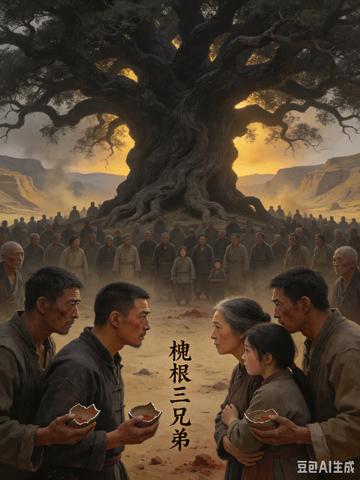
During the Hongwu period of the Ming Dynasty, the imperial court ordered large-scale immigration from Shanxi to Shandong, Henan and other places. Liu Laoshuan's family from Liujiazhai, Hongdong County, Pingyang Prefecture, Shanxi Province, was forced to embark on the road of migration because they could not afford the free relocation fee of ten taels of silver.
Liu Laoshuan has three sons - the eldest Liu Wenxiu is calm and tenacious, the second Liu Wenxian is honest and upright, the third Liu Wenyun is taciturn but clever, and the younger sister Liu Xiaomei. The family was deceived into registering under the large locust tree at Guangji Temple in Hongdong County. They were immediately surrounded by officers and soldiers and forcibly incorporated into the immigration team.
Before leaving, Liu's mother broke the only stoneware pot in the house. Each of the six members of the family held a piece of broken pottery, and agreed to use this to recognize each other if they were separated in the future.
On the way, the migrants were strung together with hemp ropes tied behind their backs, their hands strung together, and they trekked dozens of miles every day. This is where the word "hands off" comes from - when a kidnapped immigrant wants to be relieved, he must call the officers and soldiers to "let go of his hands." The old and infirm fell to death on the roadside and were thrown into the ravine at will; Liu Sanshu, the village chief, deprived himself of food rations and enriched his own pocket; Liu's mother fell ill, and Liu Wenxiu knelt down to beg for help but was saved by her brother's gathering of herbs.
The team crossed the Yellow River and arrived at the Zaoqiang transfer station in Hebei. The three Liu brothers used their carpenter skills to build a wheelbarrow for someone in exchange for ten grain pancakes. Here, they met the third son of the Zhang family, a lonely scholar, and they took care of each other after meeting in a new place.