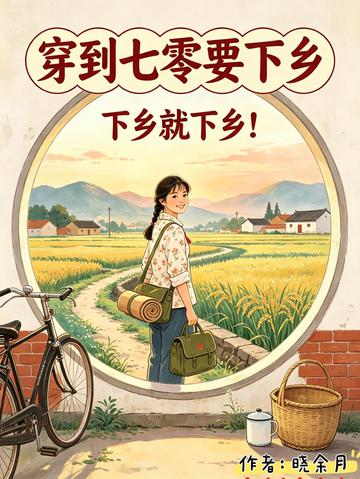
[Travel + era + going to the countryside + space + farming + abuse of scum +... The following plot is to be developed!
Ji Mengtao crosses over into an unlucky guy with the same name in the 1970s.
Her cousin stole her childhood sweetheart, and her grandmother forced her to work in the countryside.
In his previous life, the original owner was killed by gangsters while going to the countryside, and his parents both died on the way there.
Good news: She has tied up her farm space, grows vegetables, raised chickens, and obtained supplies, and lives a more prosperous life than anyone else.
Bad news: After going to the countryside, the dull gourd that she didn't see when she looked up was the unlucky guy she "accidentally" picked up on the black market before she came here!
The worse news is: Why did Liu Sanlaizi, the man in the village who killed the original owner in his previous life, disappear inexplicably? Then how can she avenge the original owner?
"System, you said Liu San Laizi is dead? Then I didn't do it myself, does that count as completing the mission?"
System: "... Forget it!"
It doesn't matter who killed him, just die!
Should he tell the host that the person next to her... Can eat people with vines?
Reader comments
Good. But the heroine doesn't owe the original owner anything, she didn't take the body by herself. It's good that the heroine passively helps the original owner to avenge her family. She also helps the original owner to separate and seek justice and save the lives of the whole family. It's very good. Moreover, the original owner hasn't left yet and doesn't seek revenge on her own. She doesn't die completely. She quietly clings to the heroine and watches the heroine do her best. It often affects the heroine's emotions and makes the heroine on the verge of losing control, which is a bit uncomfortable. Also, after the heroine went to the countryside, she never thought about living separately, so she lived in Datongpu. The key was that the educated youths were in chaos, and the food was poor and the environment was not hygienic. She could tolerate it. Moreover, most people are on both sides and will support whoever has the right. Let's talk about the bad-mouthed educated youth they just met. The heroine knows from the original owner's memory that the other person is just willful and accepts it well. The heroine has also fought against the other person every day, and she can also wholeheartedly teach the other person to live a good life. The energy of that "girl", a good heroine is the elder pampering and protecting the ignorant junior. Another educated youth whom the original owner had met several times, the heroine also accepted well. She cared deeply about whether the other person would be okay in another village. She went there to fight for the other person and caused trouble in the Educated Youth Home. She contributed food and spiritual spring water to make a feast for the other person, and also shared it with another educated youth who had helped. Then she gave the fruit produced by the space and asked the other person to help her take care of the educated youth. In what capacity does the heroine represent to thank others for their help and repay the favor? A little girl is used to describe the educated youth, and the heroine looks like an elder in the family who loves and cares for the younger one. Does the heroine put herself in the position of a mother? The male protagonist caught prey and ate together in the educated youth home. The female protagonist caught up and ate together. After eating, she said that she had also picked up prey. Then she was questioned as to why she didn't bring it back, even though the other party was confident and had problems. But the heroine probably has more problems. She gave the food to the educated youth in another village. She just kept silent without bringing it back. Why did she have to jump out and say that there was prey? She was full after eating.
Good. But the heroine doesn't owe the original owner anything, she didn't take the body by herself. It's good that the heroine passively helps the original owner to avenge her family. She also helps the original owner to separate and seek justice and save the lives of the whole family. It's very good. Moreover, the original owner hasn't left yet and doesn't seek revenge on her own. She doesn't die completely. She quietly clings to the heroine and watches the heroine do her best. It often affects the heroine's emotions and makes the heroine on the verge of losing control, which is a bit uncomfortable. Also, after the heroine went to the countryside, she never thought about living separately, so she lived in Datongpu. The key was that the educated youths were in chaos, and the food was poor and the environment was not hygienic. She could tolerate it. Moreover, most people are on both sides and will support whoever has the right. Let's talk about the bad-mouthed educated youth they just met. The heroine knows from the original owner's memory that the other person is just willful and accepts it well. The heroine has also fought against the other person every day, and she can also wholeheartedly teach the other person to live a good life. The energy of that "girl", a good heroine is the elder pampering and protecting the ignorant junior. Another educated youth whom the original owner had met several times, the heroine also accepted well. She cared deeply about whether the other person would be okay in another village. She went there to fight for the other person and caused trouble in the Educated Youth Home. She contributed food and spiritual spring water to make a feast for the other person, and also shared it with another educated youth who had helped. Then she gave the fruit produced by the space and asked the other person to help her take care of the educated youth. In what capacity does the heroine represent to thank others for their help and repay the favor? A little girl is used to describe the educated youth, and the heroine looks like an elder in the family who loves and cares for the younger one. Does the heroine put herself in the position of a mother? The male protagonist caught prey and ate together in the educated youth home. The female protagonist caught up and ate together. After eating, she said that she had also picked up prey. Then she was questioned as to why she didn't bring it back, even though the other party was confident and had problems. But the heroine probably has more problems. She gave the food to the educated youth in another village. She just kept silent without bringing it back. Why did she have to jump out and say that there was prey? She was full after eating.
Looking forward to the follow-up.