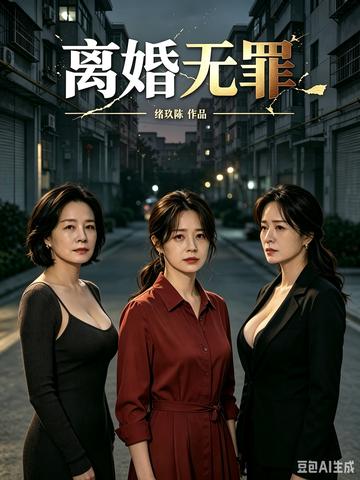
Three women, living in the same community, three marriages, the same dilemma.
They all worked hard. Li Xuemei tried to ask her husband to move back to the bedroom, but found that the body's memory could not be rewritten with "willingness". Wen Jing taught her husband to say "no", but found that he only regarded patience as acceptance. Wang Cui gave the man a full year of atonement, but found that as a wife, she had to play the role of a prison guard, and the marriage was in name only.
The "not guilty" in "Innocent Divorce" is not a legal judgment, but a life judgment.
A wife who refuses intimacy with her husband is not guilty—her body belongs to her. A wife who refuses to bear children is not guilty—her womb is not public property. The wife who chooses to leave after being betrayed is not guilty - she does not have to spend the rest of her life keeping vigil over a wound. The husband who filed for divorce is not guilty either - when there is only silence and avoidance in a relationship, leaving is not a betrayal, but an acknowledgment that both people should start over.
In the social inertia of "encourage peace but not divorce", in the moral kidnapping of "endure for the sake of the children", and in the old prejudice that "divorced women are worthless", this novel asks a real question - must the end of marriage be failure?
Or is it also a success to admit that a relationship has fulfilled its mission and to say goodbye with dignity?
"No Guilty Divorce" is written for everyone who feels suffocated in marriage. It not only teaches you how to manage a marriage, it also tells you: when the business has exhausted all your life force, leaving is also a kind of bravery.