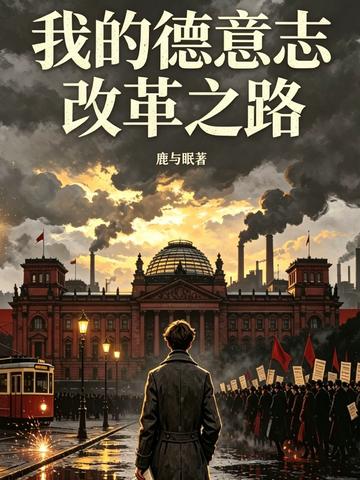
In 1905, Karl Stern woke up and found that he had traveled to a German Empire that was both familiar and unfamiliar.
This is the world after the successful revolution of 1848. Greater Germany was unified and the Frankfurt Constitution survived. But the workers under the chimneys are still starving, the fingers of child laborers are crushed by machines, and the Social Democratic Party, the largest party in the Imperial Parliament, has one-third of the votes, but is excluded from all power.
Karl started as a trainee reporter and went deep into the factory to investigate the shady story of work-related injuries, and found the world's disease in the suffering of the people at the bottom. After joining the Social Democratic Party, he proposed an unprecedented path: to use the weapons of parliament to seize power and use the power of the state to promote reforms.
From street speeches to parliamentary debates, from intra-party struggles to national campaigns, he moved step by step towards the center of power. In 1907, the Social Democratic Party won a historic election and Karl became Chancellor of the Reich.
Prussian suffrage reform, labor protection law, social security system, Bohemian national autonomy... He struggled to promote each reform within the imperial system that was full of resistance. Conservatives regarded him as an enemy, while radicals called him a traitor.
In 1914, Russia annexed the Kingdom of Poland and the World War broke out. The German, Italian, and Ottoman armies fought against the Allied Powers of Britain, France, and Russia. Amid the flames of war, Carr transformed wartime institutions into levers of social progress.
This is a long journey, how a modern soul uses the hands of a century ago to forge a future of iron and plow for an empire.
Reader comments
Why do these readers add bookshelves but don't read the books [What]



Why do these readers add bookshelves but don't read the books [What]