[No System + Political Intrigue + Officialdom and Court Strife + Daily Life + Reform]
Since the era of Dream of the Red Chamber is unclear, this novel uses an alternate-history Ming dynasty setting, with its main conflicts loosely inspired by the late Ming period.
In the third year of Jinghe, the imperial treasury was empty, fighting on the frontiers was beginning to flare up, and corruption in the Lianghuai salt administration ran deep. Lin Ruhai, the top scorer in the palace examination, was sent by imperial order to inspect Yangzhou. There, he unexpectedly uncovered a shocking embezzlement case. Exhausted and unable to turn the tide alone, he found himself at his limit.
The Su family, whose patriarch Su Bingzhen served as Minister of the Court of Judicial Review in the capital, had always remained neutral. His son, Su Huaicheng, happened to be appointed prefect of Yangzhou, and the young prodigy Su Qingyue traveled south with him.
Could this upright family from the heart of the imperial court shake up Jiangnan's deeply entrenched officialdom?
Caught in a web of political intrigue and unable to break the emperor's delicate balance of power, could this corruption scandal, which entangled both the inner palace and the Jiangnan canal network, ever be brought to a proper conclusion?
Bearing an uncertain future and the memories of two lifetimes, could Su Qingyue save the country and change Lin Daiyu's otherwise tragic fate?
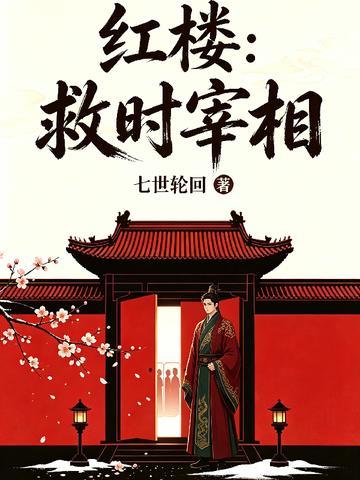







This is a book about poverty alleviation to the Xue family and demoting Dai Yu to praise Xue. The male protagonist punished Xue Pan for breaking the law by making him work as a clerk in the magistrate's office. Later, he was given a seventh-grade official. You must know that only the third-best and second-ranked officials were awarded seventh-grade officials. The author wrote that Daiyu was like a father. He said what we girls' families should be like. Everyone who has seen the Red Mansion knows this. This catchphrase belongs to Xue Baochai. Daiyu in the article has no political awareness. When something happens, Xue Baochai will ask her to analyze why Lin Daiyu's family background and political sensitivity are not as good as Xue Baochai, who was born in a merchant family. You must know that Lin Daiyu, who was imprisoned in the Grand View Garden in Dream of Red Mansions, wrote a hymn about being busy in farming and weaving when there is no hunger in the prosperous age. The author writes that Xueyan will persuade Daiyu to write a letter to her husband to invite the male protagonist out. Why does Daiyu's maid character have to be interchanged with Xue Baochai's maid character?
Since the author himself can write a book review, the author should also write it, and readers can see if it is what they want to read. Different from the previous Red Mansions novels that focus on the love between children, this book will go beyond the perspective of the Grand View Garden and the Jia Mansion to show more of the Red Mansions world outside the Jia Mansion and pay attention to the fate of the characters. We will use the perspective of the protagonist to compare the cognitive differences between the children of aristocratic families and the common people at the bottom, to see a society in the late feudal dynasty that contains crises. In addition, the book will focus more on political intrigue and official career. The conflicts and contradictions of reform will not be too simple, and will be applied to the crisis of the late Ming Dynasty to a certain extent. This is actually the main line of the book. Therefore, if you simply want to read a mindless and enjoyable story about the love between the children of Red Mansions, this book is not suitable, so please read with caution. Finally, everyone is welcome to read (ᐡ⦁⩊⦁⸝⸝ᐡ)₊୭