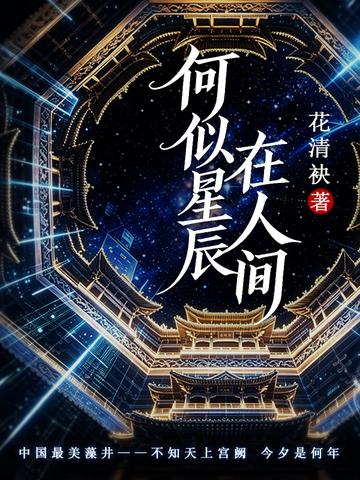
[Realistic themes | Ancient books and intangible cultural heritage | Two-way rush | Salty or sweet] "The Scenery of the Imperial Capital" once recorded: "The caisson in the palace, the copy came from the west, eight dragons, one Chinese Tibetan world tool." The thousand-year charm of "China's most beautiful caisson" makes the forgotten galaxy reborn at the fingertips.
Shen Wan, a 27-year-old curator of ancient architecture and inheritor of painted paintings, guarded this caisson and her grandfather's last words. She tried her best to build the caisson on the dome, until Chen Xingbei, a CAVE algorithm engineer from Tiangong Technology, broke into the Taisui Palace with his code and a wild words: "I want the caisson to be seen by 1.4 Billion people." A guardian soul, a broken boundary, numbers are bridges, and ancient and modern times face each other. Shen Wan's colorful paintbrush, Chen Xingbei's algorithm, his father's dusty database, and his ancestors' hand-drawn mortise and tenon diagrams - the hard work of three generations has been twisted into a rope in the desperate situation of inheritance.
This is a slice of reality under Beijing's "Technology Empowering Culture" action plan, and it is also a literary echo of the digital protection and mass communication of China's cultural heritage. When the algorithm meets the paintbrush, and the code meets the mortise and tenon joints, the thousand-year-old caisson is no longer a cultural relic on the shelf, but becomes the starry sky that hundreds of thousands of people look up to at their fingertips. The forgotten galaxy was seen again, and the moment we looked up, it was just as Su Shi said - it seemed like we were in the human world.