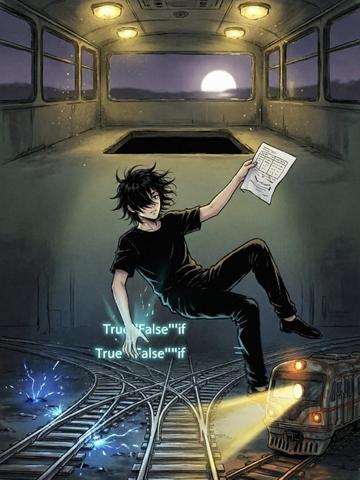
The moment the bus plunged off the cliff, Su Ran thought he was dead.
When he woke up, he was sitting on a midnight bus in motion. Eleven other passengers sat nearby, and outside the windows stretched an endless wasteland. The announcement said: twelve stops, and one person must get off at each. Fail, and you die.
No System to give him an edge, no golden finger, just a pen in his pocket and a note that updated itself. Su Ran, a former data analyst at a major internet company, crouched in the bus aisle and began listing data, drawing charts, and deducing the rules for getting off.
At the first stop, he found a nonexistent back door in one minute.
At the second, he used the sequence of seat numbers to guess where the exit was.
But the deeper he went, the more he realized that the “absolute rules” in each horror-game instance were evolving in real time, becoming more and more tailored to target him.
While every other player was running for their life, he pulled out his pen and paper.
When the rules tried to kill him, he chose to rewrite them.
Twelve instances. One truth. No one could clear the game by luck. But logic could do it.