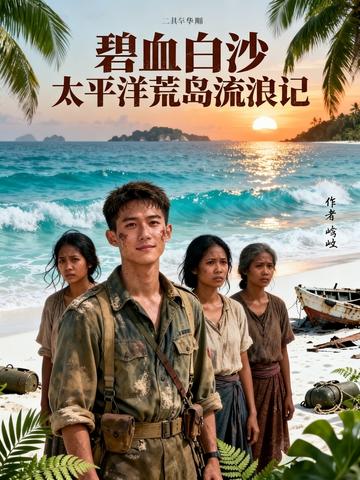
The attack on Pearl Harbor in 1941 changed the fate of Chen Weimin, the grocery-store boy from San Francisco’s Chinatown.
A second-generation Chinese American, he could recite the Declaration of Independence, yet he was always treated as a “Chinaman.” To prove he belonged to this land, the nineteen-year-old donned a uniform and headed for the Pacific theater.
From the white sands of Makin Island to Guadalcanal’s “green hell,” and then to Tarawa’s coral sands stained red with blood, he survived every brutal battle. Amid the mud, malaria, and bodies of his comrades, he endured from raw recruit to hardened veteran.
Then, in late 1944, the hospital ship he had been ordered to escort was sunk by the Japanese. On the burning sea, he and three Japanese women prisoners of war were swept by the currents onto an island cut off from the rest of the world: Ryoko, a quiet and stoic military doctor; Chinatsu, a cold and violent special forces operative; and Hanae, an innocent, fragile nurse.
A turquoise lagoon, snow-white beaches, and a jungle that changed with the seasons. In this Eden forgotten by the world, four enemies gradually became the only family each other had.
But the civilized world would not leave them alone. When a Japanese reconnaissance boat appeared on the horizon, the three women had to choose: return to a country woven from lies, or betray it and protect the “enemy.”
After the war ended, one of the women jumped into the sea and killed herself. She never revealed what had happened on the island.
An island held them captive for two years. It gave them both paradise and hell.
Blood stained the white sand. The Pacific remembers everything.