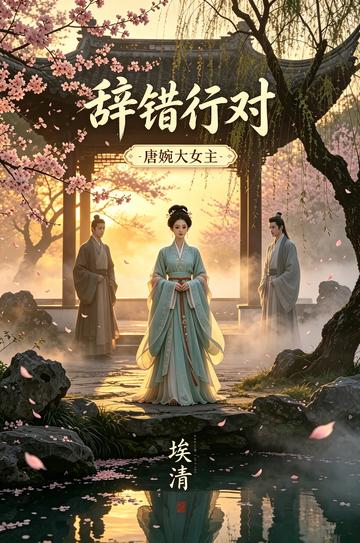
She spent her life rewriting Lu You’s “Wrong, wrong, wrong” into “Right, right, right.”
Tang Wan, a modern woman, transmigrates to the Southern Song dynasty and wakes up floating in the icy waters of the Bian River. The original owner of her body had thrown herself into the river after Lu You married someone else. Rescued by Zhao Shicheng, a young nobleman of the imperial clan, she discovers that she bears the stigma of being a “remarried woman” and has become the doomed, tragic footnote to the famous poem “Phoenix Hairpin.”
But she refuses to accept her fate.
Since she’s here, she’ll live with her head held high. She uses modern knowledge to solve problems and find a way forward, makes her living in the marketplace, and carves out a measure of dignity for herself within the confines of social convention. To Lu You, who comes back filled with regret and refuses to let her go, she says, “The poem you wrote is about your regrets, not my story.” To Zhao Shicheng, who devotedly stands by her, she offers a love built on standing side by side, not as anyone’s substitute, and certainly not as anyone’s subordinate.
From the desperate moment on the Bian River bridge to a new beginning beneath a gentle spring rain, Tang Wan steps beyond the sighs of a poet’s soul that have echoed for a thousand years and forges a path entirely unlike the one history recorded. This is more than the tale of a modern woman turning her fate around. It’s the story of a woman breaking free from destiny’s chains and living a life without regrets.
Lu You left behind an immortal poem, while Tang Wan left behind her own name.