When I wrote the last word, dusk in Dunhuang was spreading over the window sill. Many scenes in this novel come from my real-life experiences during my three trips to the west - the barefoot little girl selling dried apricots outside the Mogao Grottoes, the bunches of grapes hanging in the drying house in Turpan, and the sound of the Tajik old man's dutar on the Pamir Plateau. They have lived in my notebooks for many years, and now they finally live in stories.
There are too many shadows of people I admire in Ye Xiaoxi. Those volunteer teachers who gave up urban life and took root in the west, those unknown painters who spent their whole lives copying murals, and those ordinary people who founded rural libraries in the Gobi Desert. They made me believe that the inheritance of civilization does not need to be vigorous. It only requires one person to identify a path and keep walking.
While writing this book, I often thought of the shock of standing nine floors down for the first time. Painters thousands of years ago used brushes made of camel hair, dipped in mineral pigments, to outline their beliefs one stroke at a time in the dark caves. They don't know how many centuries their works will travel through, just like we today don't know when our efforts at this moment will take root.
But the road is ultimately made by people.
If this book can make a reader more curious about that land, or make a child believe that the distance is worth traveling to, then it can be considered as leaving a light of its own among the gravel of Dunhuang.
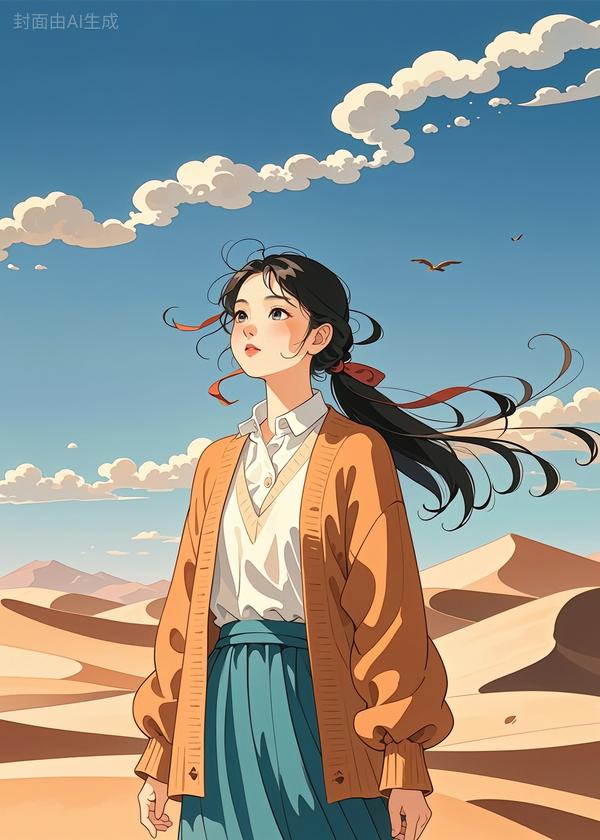





When I wrote the last word, dusk in Dunhuang was spreading over the window sill. Many scenes in this novel come from my real-life experiences during my three trips to the west - the barefoot little girl selling dried apricots outside the Mogao Grottoes, the bunches of grapes hanging in the drying house in Turpan, and the sound of the Tajik old man's dutar on the Pamir Plateau. They have lived in my notebooks for many years, and now they finally live in stories. There are too many shadows of people I admire in Ye Xiaoxi. Those volunteer teachers who gave up urban life and took root in the west, those unknown painters who spent their whole lives copying murals, and those ordinary people who founded rural libraries in the Gobi Desert. They made me believe that the inheritance of civilization does not need to be vigorous. It only requires one person to identify a path and keep walking. While writing this book, I often thought of the shock of standing nine floors down for the first time. Painters thousands of years ago used brushes made of camel hair, dipped in mineral pigments, to outline their beliefs one stroke at a time in the dark caves. They don't know how many centuries their works will travel through, just like we today don't know when our efforts at this moment will take root. But the road is ultimately made by people. If this book can make a reader more curious about that land, or make a child believe that the distance is worth traveling to, then it can be considered as leaving a light of its own among the gravel of Dunhuang.